
Eating Oxford
The History of Chocolate: from Cacao Pod to Creamy Bar


It’s no coincidence that February is both Heart Health Month and National Chocolate Lovers Month. After all, chocolate has been stimulating hearts and minds, literally, for about 4,000 years.
Once reserved as tribute to gods and royals, chocolate and cocoa now fuel a global industry of $117-$128 billion annually. Agricultural sustainability and fair trade labor practices for cacao production are now a major concern for economists and ethicists focused on improving third-world living conditions and the environment.
Chocolate Facts  A cocoa tree takes 5-8 years to mature, and they are grown in the shade of banana and mango trees. Each tree is expected to yield about 5 lb of chocolate a year – the beans grow along the trunk of the trees.
Milk chocolate: contains at least 10% chocolate liquor (raw chocolate pressed from carob bibs, the center of the bean shells removed after roasting for 2 hours at 250˚F).
Sweet and semi-sweet chocolate are made from 15-35% chocolate liquor plus sugar, cocoa butter and vanilla.
Bittersweet chocolate, often called “baker’s chocolate,” contains 50% chocolate liquor and has a bite (unsweetened).
White chocolate technically is not chocolate: It contains at least 20% cocoa butter, 3.5% milk fat, 14% milk solids, and no more than 55% sugar or other sweeteners, but none of the dark-colored cocoa solids or cocoa liquor, and also none of the stimulants or antioxidants of regular chocolate.
It takes about 400 cacao beans to make one pound of chocolate (450 grams).
U.S. chocolate makers use over 3.5 million pounds of milk daily to make chocolate.
Today, approximately two-thirds of the world’s cocoa is produced from cacao grown in west Africa, and about half of that amount in Cote d’Ivoire, where it is estimated as much as 40% of the labor force has included slave workers.
The average American eats 10-12 pounds of chocolate a year compared to the Swiss, who eat about 21 pounds a year.
The Chocolate Timeline The Mokaya on the Chiapas Pacific coast of Mexico were the first culture known to have used chocolate.
 The Olmecs, in what is now the Vera Cruz region of southeastern Mexico, were preparing chocolate beverages in the Early Formative Period (1900-900 BCE). They used it mixed with water, and sometimes with maize and chili for religious rituals or as a medicinal drink.
Mayans (flourishing in southeastern Mexico, the Yucatan peninsula and Guatemala, 1000 BCE -1542 ACE), and Aztecs (Aztec civilization in the central Mexico Valley, flourishing circa 1325-1521 ACE) also made a frothy, bitter drink from cacao; the Mayan version was hot, the Aztec version was cold.
Cacao plants grew abundantly in the Mayan region. Cacao seeds were used as currency throughout the Mayan empire and later by the Triple Alliance of the Aztecs.
The Spaniards invading Mexico encountered and adapted the terms for the cacao beverage(s), including the Aztecs’ Nahuatl language variations of “xocoatll” (zho-ko-atul, meaning beverage of maize), “xococ” (pronounced sho-coke, meaning sour or bitter) and “atl” (meaning water or drink ), and “chokol” (meaning hot in Yucatec Maya) and “atl” (water); “chicolatl” (Eastern Nahuatl for beaten drink) or “cacaua atl” (meaning drink of cacao).
The Pueblos, who flourished in what is now the American Southwest, imported cacao from Mexico between 900 and 1400 ACE. Unlike their Central American colleagues, the Pueblos used chocolate in a common beverage consumed by all members of their culture.
The Aztecs believed that Quetzacoatl had been condemned by the other gods for sharing chocolate with humans. By 1400, conquered cultures that grew cacao beans were ordered to pay them as a tax or tribute for being ruled by the Aztecs.
Considering it a medicinal aphrodisiac and energy booster, Hernán Cortez in 1528 took Montezuma’s special xocoatl chocolate beverage to the Spanish Royals. Unlike Columbus 30 years earlier, Cortez sweetened his chocolate drink with West Indian sugar before presenting it at Court. This time the Royals took notice.
The Spaniards started a cocoa processing plant in 1580. They kept strict control of chocolate within their empire’s borders.
 Chocolate was taken to the royal wedding of Anne of Austria (daughter of Spain’s King Phillip III) to King Louis XIII of France in 1615, and soon became popular among the ruling classes throughout Europe and England.
The English, Dutch and French established their own cacao plantations in Southeast Asia and Africa, run between the early 17th and late 19th centuries with slave labor.
Dr. James Baker and John Hannon opened the first American chocolate factory at a water-powered mill in Dorchester, Massachusetts, in 1765, selling hard cakes of chocolate that colonists ground up to make hot chocolate.
American colonials’ chocolate was imported from the West Indies and became a patriotic consumable after the British Townshend Acts of 1767 levied taxes on shipments of tea to the colonies.
American soldiers used cacao as food during the American Revolutionary War; during the War of 1812, Baker’s Chocolate had to be close for 2 years due to the seaport blockades by the British.
In 1815, Dutch chemist Coenraad Van Houten developed a process to reduce the bitterness by adding alkaline salts to chocolate.
In 1828 Van Houten created a press to remove cacao butter from the chocolate liquor, enabling the chocolatier to improve flavor consistency.
Joseph Fry learned how to add back melted cacao butter to render chocolate moldable; Fry & Sons introduced the first solid eating chocolate in England in 1847, but it had a bitter taste.
In 1849, Domingo Ghirardelli began selling chocolate to Gold Rush miners, opening a factory in San Francisco in 1852; it is American’s longest continuously operating chocolate manufacturer.
 In 1852, Baker’s Chocolate employee Samuel German invented a “sweet chocolate” that had a higher sugar content than previous baking chocolates; it was named “German’s Sweet Chocolate”; German Chocolate Cake is named after Samuel German’s chocolate.
Between 1874 and 1875, Swiss chocolatier Daniel Peter combined powdered milk (a process developed by Henri Nestlé) with chocolate liquor to create milk chocolate.
In 1879 Rodolph Lindt invented a “conche” machine to evenly distribute the cocoa butter within the chocolate using oxidation and frictional heat to release acids and volatile chemicals. Length of time conching the chocolate affect(s)ed its flavor, and chocolate bars became a tasty edible.
Milton Hershey visited the 1893 World’s Fair in Chicago and bought equipment to make chocolate coating for his caramels, later producing milk chocolate bars.
Hershey opened a chocolate factory for producing those bars in what is now Hershey, PA, in 1905 – near the dairy farms that provided the milk for the chocolate.
In The Candy Cookbook, published in 1917, Alice Bradley featured the first-ever chapter dedicated solely to chocolate recipes.
The U.S. Quartermaster Corps shipped 20-40-pound blocks of chocolate to Army bases in Europe during World War I; the blocks were chopped into bars for use by the soldiers
In 1937, Ruth Graves Wakefield, owner of the Toll House Inn in Whitman, MA, sold her chocolate chips idea and cookie recipe to Nestlé in exchange for a lifetime supply of chocolate.
M&M’s were invented in 1941 as an energy-boosting ration for World War II soldiers; the hard candy shell prevented the chocolate from melting.
The U.S. government still includes chocolate in rations to troops, and chocolate has gone into space with U.S. astronauts.
For a delicious chocolate truffle recipe, visit On Cooking Southern.
Laurie Triplette is a writer, historian and accredited appraiser of fine arts, dedicated to preserving Southern culture and foodways. Author of the award-winning community family cookbook GIMME SOME SUGAR, DARLIN’, and editor of ZEBRA TALES (Tailgating Recipes from the Ladies of the NFLRA), Triplette is a member of the Association of Food Journalists, Southern Foodways Alliance and the Southern Food and Beverage Museum. Check out the GIMME SOME SUGAR, DARLIN’ website and follow Laurie’s food adventures on Facebook and Twitter.
Eating Oxford
The Velvet Ditch brings seafood and steady service to Oxford
A new hot spot offering seafood, bar favorites and steady service in a setting that fits both weeknights and game weekends

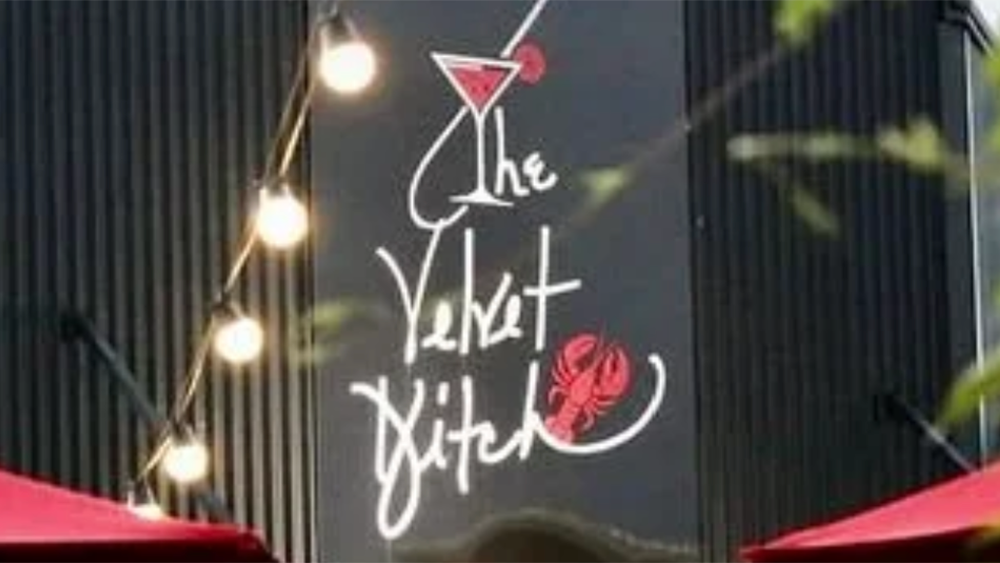
OXFORD, Miss. — The Velvet Ditch has become a regular stop for people looking for seafood plates, sandwiches and a sports-bar setting near the Oxford Square.
Its menu leans toward familiar items, and the service is one of the reasons diners say they return. The restaurant sits on South Lamar Boulevard, close enough to campus and the Square to draw steady traffic on most nights.
The interior features televisions, open tables and a bar that stays busy during major sporting events. Staff members move between areas at a quick pace.
A visitor can see at a glance that the restaurant is built to handle crowds during football weekends or spring baseball series.
The menu includes catfish, shrimp, burgers and pasta dishes. One food-travel site highlighted the “Catfish with Grits” and the “Lobster Mac and Cheese” as standout items.
Another review praised the staff, noting that a server “went above and beyond to ensure guests had a memorable experience.” Those comments help show why service is often mentioned in accounts from diners.
Guests also mention that the kitchen keeps wait times short. Even on harder nights, food tends to reach tables in a steady rhythm. For people on a schedule, that can be a deciding factor.
Some patrons report that visiting in the early evening brings a quieter atmosphere. Later hours often mean a louder bar setting, especially during games or campus events.
One commenter on social media wrote that the place was “packed” but said staff and management stayed active and remained helpful. That reflects a common pattern in local feedback.
The porch and outdoor seating add to the appeal, especially during fall and spring weather. The spot offers extra room for groups and keeps the dining room from feeling crowded when traffic picks up.
For diners seeking a consistent seafood option that works for friends, families or visitors, The Velvet Ditch meets those expectations without trying to be a fine-dining restaurant.
Most guests seem to accept it as a casual place where they can get reliable favorites.
Menu impressions and pacing
Portion sizes fall on the larger side. Some customers report leaving with leftovers, which adds value for a college-town audience.
Pricing falls within the range expected for a restaurant near the Square, though the seafood dishes push slightly higher than the sandwiches.
Most tables seem to order at least one fried dish. For people choosing wings or fried seafood, asking about crispness is a reasonable step.
One local blog gave the wings a 6.8 out of 10, citing texture but praising the seasoning and service.
It is not unusual for fried items to vary between busy and slow shifts, and guests sometimes adjust their orders based on earlier visits.
Pasta selections, including shrimp-based dishes, tend to draw positive remarks for flavor.
Several diners have shared online comments praising the seasoning balance, which can be harder to maintain in larger kitchens on crowded nights.
Service remains one of the restaurant’s strengths. Reports mention hosts greeting guests quickly and servers keeping check-ins consistent without becoming intrusive.
These basic steps stand out in a setting that often juggles game-day crowds.
The bar area typically fills first. Guests wanting a quieter space may choose tables near the front or the patio. Staff usually offer guidance on where noise levels are lower.
Visitors should expect a mixed crowd. Students, families, alumni and travelers pass through during busy weekends.
The range creates a social atmosphere without shifting the restaurant’s identity into a full bar.
When the pace picks up, the kitchen maintains a workmanlike rhythm. Though the menu is wide enough to challenge any staff during peak hours, food tends to be steady.
This consistency is part of why the restaurant keeps its place among Oxford’s regular dining choices.
Final thoughts
The Velvet Ditch presents itself as a casual dining option that fits Oxford’s blend of campus life and regional visitors.
Diners visiting early in the evening, before louder crowds settle in, often get a more relaxed experience. Later hours tilt toward a sports-bar feel, but service remains attentive.
The restaurant’s strengths lie in its steady approach. It does not try to compete with upscale dining rooms in town.
Instead, it focuses on familiar dishes, efficient service and a setting that suits both weeknight diners and visitors in town for a game.
For people seeking seafood or bar favorites near the Square, The Velvet Ditch offers a dependable choice.
Key takeaways
-
The Velvet Ditch delivers steady service and familiar seafood-and-bar dishes near the Oxford Square.
-
Early visits offer quieter meals, while later hours bring louder sports-bar energy.
-
Portions are large, and service remains a strong point even on busy nights.
Eating Oxford
Captain Morgan’s Pirate Ship Grounds on the Oxford Square for Three Days of Swashbuckling Fun
Captain Morgan’s Pirate Ship drops anchor in Oxford Square for a three-day rum-filled adventure supporting local arts programs.
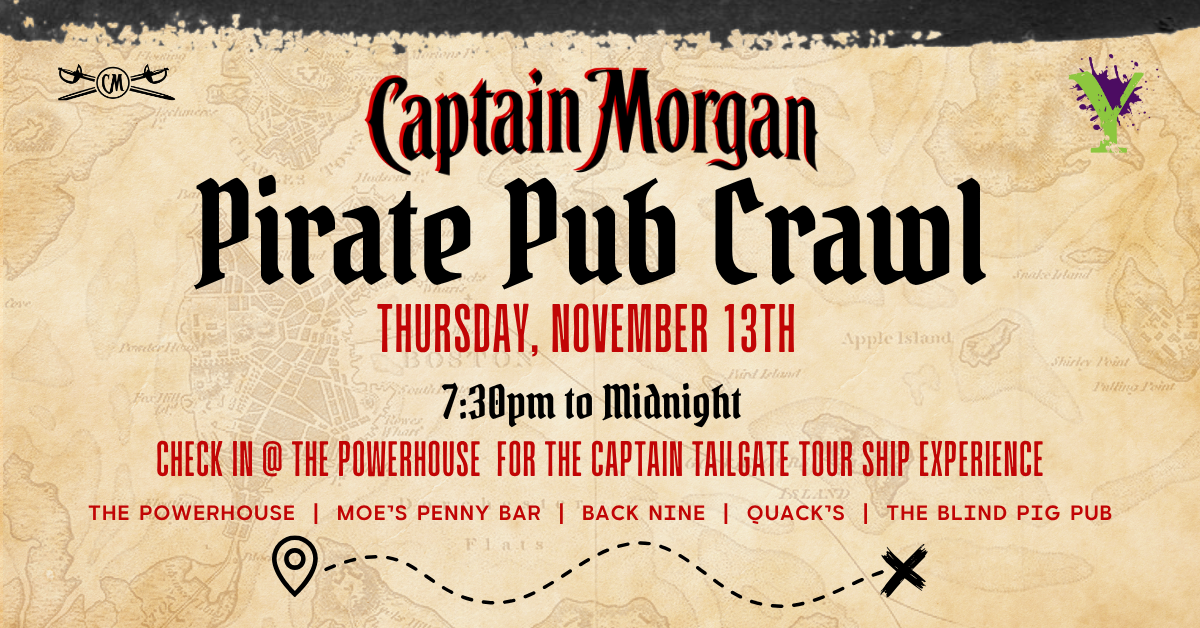
The Oxford Square is about to get a taste of the high seas as Captain Morgan’s legendary Pirate Ship makes landfall for three days of rum, revelry, and community celebration. The nearly 40-foot vessel will drop anchor right in the heart of downtown, inviting residents and visitors alike to climb aboard for photos, exploration, and a chance to join the pirate crew—if they dare.
The festivities kick off Thursday, November 13, with the Captain Morgan Pirate Pub Crawl, benefitting the Yoknapatawpha Arts Council. The crawl begins with a 7:30 p.m. check-in at The Powerhouse Community Arts Center, where participants will experience the Captain’s Tailgate Tour Ship and enjoy a signature cocktail.
From there, crews will sail through town—stopping at Moe’s Penny Bar, Back Nine, Quack’s, and The Blind Pig Pub—collecting treasure map stamps, stories, and plenty of pirate memories along the way. The night culminates with a grand drawing for a Captain Morgan Yeti Cooler, stocked with spirits and exclusive gear.
The event is free, with donations and drink proceeds directly supporting the Arts Council’s free community arts programs throughout Oxford.
Participants are encouraged to arrive in full pirate regalia for extra raffle entries and bragging rights.
So grab your eyepatch, raise your glass, and prepare to set sail without ever leaving the Square. The Captain Morgan Pirate Ship may be grounded—but the adventure, and the cause it supports, will lift everyone’s spirits.
To learn more, visit www.oxfordarts.com.
Eating Oxford
Lenora’s in Oxford delivers solid Southern fare with attentive service
At Lenora’s Restaurant in Oxford, Mississippi the seafood is fresh, the staff attentive, and dishes like rib eye and catfish stand out
OXFORD, Miss. — At Lenora’s Restaurant in the heart of Oxford, Mississippi, quality doesn’t come from gimmicks or gimmickry.
It’s built from consistency, craft, and the quiet confidence of a kitchen that knows its identity of Southern elegance, balanced by seafood staples and a touch of upscale polish.
A first impression that lasts
Situated at 309 North Lamar Boulevard, just steps away from the Square, Lenora’s manages to create a dining experience that feels elevated without being exclusive.
Soft lighting, rustic wood accents, and an uncluttered layout give the space a comfortable rhythm.
There’s a sense of refinement that doesn’t need to announce itself. It simply exists, welcoming guests into a dining room that suits both quiet conversation and shared celebration.
Tables are well-spaced, and the pace is deliberately calm. From the moment diners walk in, staff are attentive but never overbearing, allowing the experience to unfold at its own tempo.
A menu with depth and purpose
The menu at Lenora’s blends Southern influence with coastal finesse.
The star attractions often lean toward seafood—dishes like the seared catfish Lenora and shrimp pasta Lenora exemplify the restaurant’s commitment to familiar flavors delivered with thoughtful precision.
These dishes arrive hot, well-seasoned, and plated with attention that suggests pride behind the scenes.
Steaks are another strong point. The rib-eye, in particular, arrives with a sear that holds its juices and a side of smashed potatoes that achieves that rare feat of being both comforting and composed.
The mixed grill offerings allow guests to sample a little bit of everything—surf and turf combinations that work in harmony.
Appetizers such as the jumbo lump crab cake and the beef tenderloin skewer serve as a warm welcome to the meal. Meanwhile, seasonal salads, grilled vegetables, and expertly prepared greens round out the plate without feeling like afterthoughts.
Service that elevates the experience
While food often gets top billing in restaurant reviews, the service at Lenora’s deserves its own recognition. Guests routinely highlight the staff’s friendliness and professionalism.
In one recent example, a reviewer praised server Emily S. for being “calm, friendly, and super attentive,” even during a particularly busy evening.
That level of consistency isn’t an accident. The staff—from the front-of-house to the kitchen—operate with clear communication and a shared understanding of what makes for a great dining experience: timing, warmth, and a sense of ease.
Even when the restaurant is bustling on weekends or special occasions, the flow remains steady. Courses arrive at the right intervals, water glasses stay full, and special requests are handled without hesitation.
Finishing strong with dessert and drinks
When it comes to the final course, Lenora’s makes a strong case for lingering just a little longer.
Bread pudding with white chocolate sauce is a standout, offering a warm, rich bite without becoming overly heavy.
Other dessert selections rotate seasonally, giving repeat diners something new to look forward to.
The bar program includes handcrafted cocktails, a curated wine list, and premium spirits, creating an opportunity to extend the evening in relaxed fashion.
Whether it’s a classic old fashioned or a house-infused martini, the drink selection pairs naturally with the pace and style of the meal.
Consistency and craft at the center
Lenora’s isn’t trying to be trendy. It isn’t chasing viral moments or social media flash. What it offers instead is something harder to replicate: a sense of place.
A restaurant that knows who it is, knows what it does well, and delivers on that promise night after night.
It’s this combination of skill in the kitchen, warmth at the table, and ease in the atmosphere that makes Lenora’s a cornerstone of Oxford’s dining scene.
Whether it’s a dinner out with family, a date night, or a business conversation over a meal, Lenora’s fits the moment.
Location and hours of operation
-
Address: 309 North Lamar Boulevard, Oxford, Mississippi 38655
-
Phone: (662) 236‑1144
-
Hours:
-
Monday, Tuesday, Thursday: 5:00 p.m. – 9:00 p.m.
-
Wednesday, Friday, Saturday: 5:00 p.m. – 10:30 p.m.
-
Sunday: Closed
-
Note: On major event weekends, opening hours may shift to 4:00 p.m.
-
3 key takeaways
-
Southern seafood done right — Signature dishes like the seared catfish and shrimp pasta showcase flavor without overcomplicating.
-
Service with care — Staff are consistently described as professional, warm, and attentive, contributing to the calm, composed environment.
-
Refined but relaxed — The space strikes a balance between casual comfort and upscale polish, making it accessible to all types of diners.

Hunter Elliott Joins Elite Ole Miss Company in Win Over Texas A&M

Ole Miss Softball Lands Two Players on All-SEC Second Team

How to Watch Ole Miss Baseball’s Crucial SEC Opener Against Texas A&M


-
Eating Oxford12 years ago
Food & Drink: What’s Hot and What’s Not in 2015
-
Arts & Entertainment9 years ago
EatingOxford: 3 Steps to Success at 3 Blind Wines
-
Eating Oxford12 years ago
HottyToddy Tailgate: Crescent Rolls 5 Ways
-

 Eating Oxford4 years ago
Oxford restaurants adjust to inflation, other pressures by raising prices
-
Eating Oxford13 years ago
My Michelle’s: Personal Chefs
-
 Eating Oxford4 years ago
Locally Driven and Focused to Serve from Day to Night: Good Day Café & Bar Muse
-
 Eating Oxford4 years ago
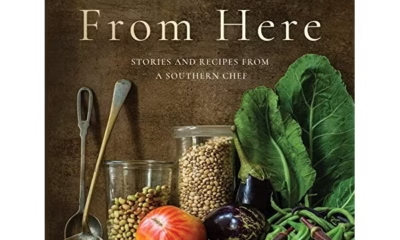
“I am from here”: Snackbar Chef Vishwesh Bhatt celebrates new cookbook
-
Eating Oxford10 years ago
Oxford Stories: Chicken on a Stick Is an Oxford Tradition
Jocelyn
May 17, 2015 at 12:46 pm
Right away I am going to do my breakfast, once having my breakfast coming again to
read further news.
Panthers Jersey
February 3, 2016 at 12:53 am
Panthers Jersey Pro Shop. Buy full selection of cheap arolina panthers
Nike jerseys of men,women and kids. Recommend the hot
cam newton shirt clothing and more wholesale nfl jerseys in black,blue,white for game,elite.
94Evelyn
July 30, 2017 at 5:56 pm
Hello blogger, i must say you have very interesting content here.
Your page can go viral. You need initial traffic boost only.
How to get it? Search for; Mertiso’s tips go viral