
Contributors
On Cooking Southern: Shake Up St. Paddy’s With Fried Green Tomato Stacks

 IRISH SOUTHERNISM OF THE WEEK
Lose an hour in the morning and you’ll be looking for it all day: A late start puts a person behind all day long, in need of a do-over…. The way I feel every year during the week after Americans “Spring forward” into daylight savings time. (Those glib-tongued Celts imbued the South’s inhabitants with their genetic gift for gab and humor.)
FRIED GREEN TOMATOES STACK UP AS FINE AS FROG HAIR
“It’s not easy being green,” says Kermit the frog. But this time of year, everybody wants to be green, wear green, decorate with green, or consume green.
And why not? It’s St. Paddy’s Day week, when most Americans claim a wee drop o’ Celtic blood, with or without confirmation from ancestry.com.

Chicago River during St. Patrick’s Day week
In anticipation of our annual March 17th excuse for an Irish party, this is the week when entire rivers have been dyed green. Corned beef and cabbage are “perfuming” enough kitchens to gas up a hot air balloon. And the week’s sales of Guinness and Irish whiskey could float a boat.
But this cook has been there, done that already. That’s why I’m going off script for the first time in five years by introducing fried green tomato stacks into the week’s green-themed culinary celebration. The tried-and-true Southern dish serves equally well as appetizer or main dish, and it pairs well with my favorite brews.
The “recipe” is an assemblage composed of three separate parts: Fried green tomatoes, bacon pimento cheese and roasted red pepper pesto. What’s not to love about ANY and ALL of these? And once made up, each component may be paired with other dishes and condiments. Here’s a thought: Layer the fried green tomatoes, pesto and pimento cheese on your favorite burger. Can we spell H-E-A-V-E-N??
If staying pure to the concept, though, create stacks by alternating layers of fried green tomatoes with the bacon pimento cheese. Slather the layers with the red pepper pesto.
Try pairing your Fried Green Tomato Stacks with one of Mississippi’s home-brewed craft beers such as Biloxi Brewing’s Salty Dog beer. Then go on to experiment with beers from the other breweries. As the Irish always say, “It’s six of one half a dozen of the other” as to which will whet your whistle best.
Sláinte, y’all!
FRIED GREEN TOMATOES
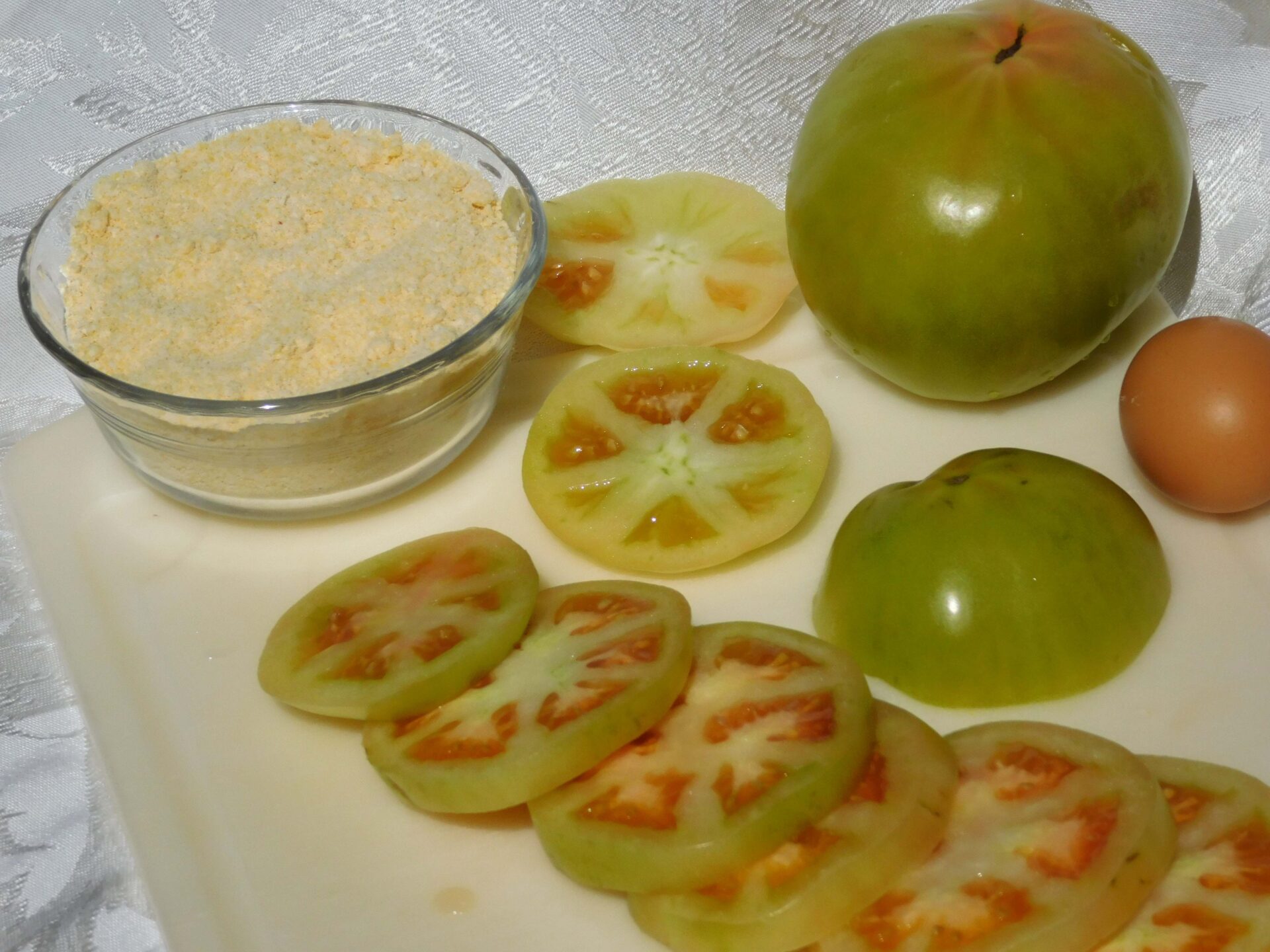 Green tomatoes are available at Kroger and Walmart. Plan to use them the day of purchase or they will continue ripening.
1 lb green tomatoes, skin on
1/2 c all purpose flour
1/2 c yellow corn meal
3 eggs, beaten
1/2 tsp table salt
Canola oil
Beat the eggs and have ready in a bowl. Whisk together the flour, salt and corn meal and have ready in a large plate. Slice the tomatoes about a quarter-inch thick, skin-on. Dip in the egg, shake off excess, and dredge in the flour-cornmeal mixture. Shake off excess and place on a rack to set up.
Pour about a half-inch of cooking oil into a large skillet. Heat on medium-high to about 350˚ (oil will be about to pop but not burning); lower heat to medium if too hot. Carefully slide prepped tomatoes into the hot oil, sides not touching. Fry for about two minutes or until bottom side begins to turn golden brown. Carefully flip to other side and repeat. Remove fried tomatoes to rack positioned over drip pan or paper towels. Sprinkle sparingly with salt to taste.
While still hot, form the tomato stacks; the pimento cheese will begin to melt where it touches the hot tomatoes.
BACON PIMENTO CHEESE
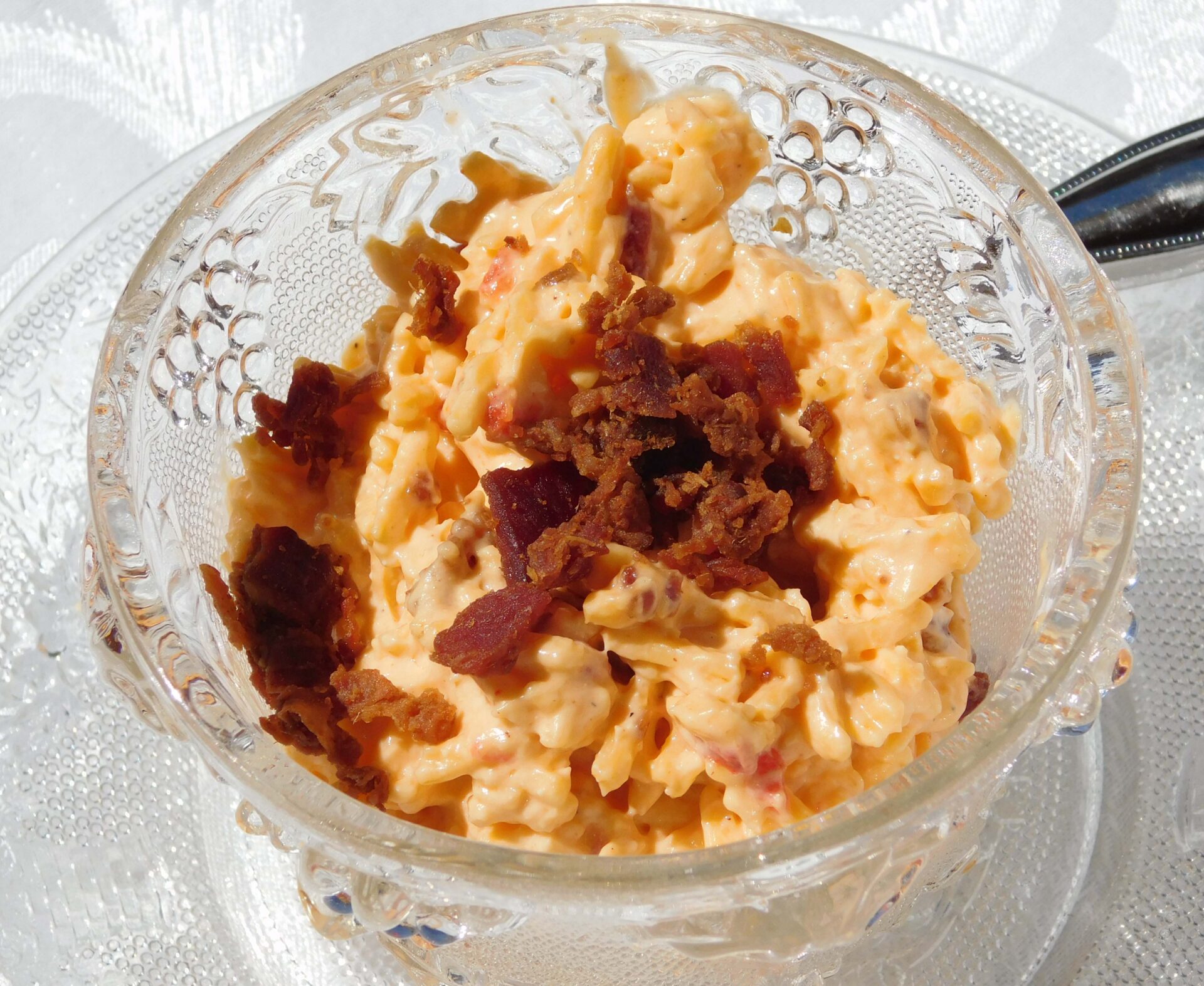 This recipe harks back to the recipe’s origin by calling for cream cheese. When there’s no time to create homemade pimento cheese, I use Pawley’s Island Palmetto Cheese, and mix in Hormel original crumbled bacon.
2-oz jar of diced pimentos (drained)
8 oz extra-sharp cheddar cheese, shredded
4 oz cream cheese
1 tsp white granulated sugar
1/2 c (Duke’s) mayonnaise
Dash of cayenne pepper
Splash of Tabasco or Louisiana hot sauce
1/4 c finely chopped onion, optional
3-4 slices bacon, crisp cooked and crumbled fine (equivalent of 3-4 T)
Add pimentos to cheese in a bowl and mix. Add sugar, mayo and cream cheese to mixture until blended. Stir in cayenne and hot sauce. Last, add the onions (juice squeezed out through paper towel), stirring with hand mixer if you want the mixture soft and spread-able, or with a hand whisk if you prefer it “chunky.” Scrape down the sides of the bowl as you mix. Fold in crumbled bacon until well blended. Chill at least 2 hours.
ROASTED RED PEPPER PESTO
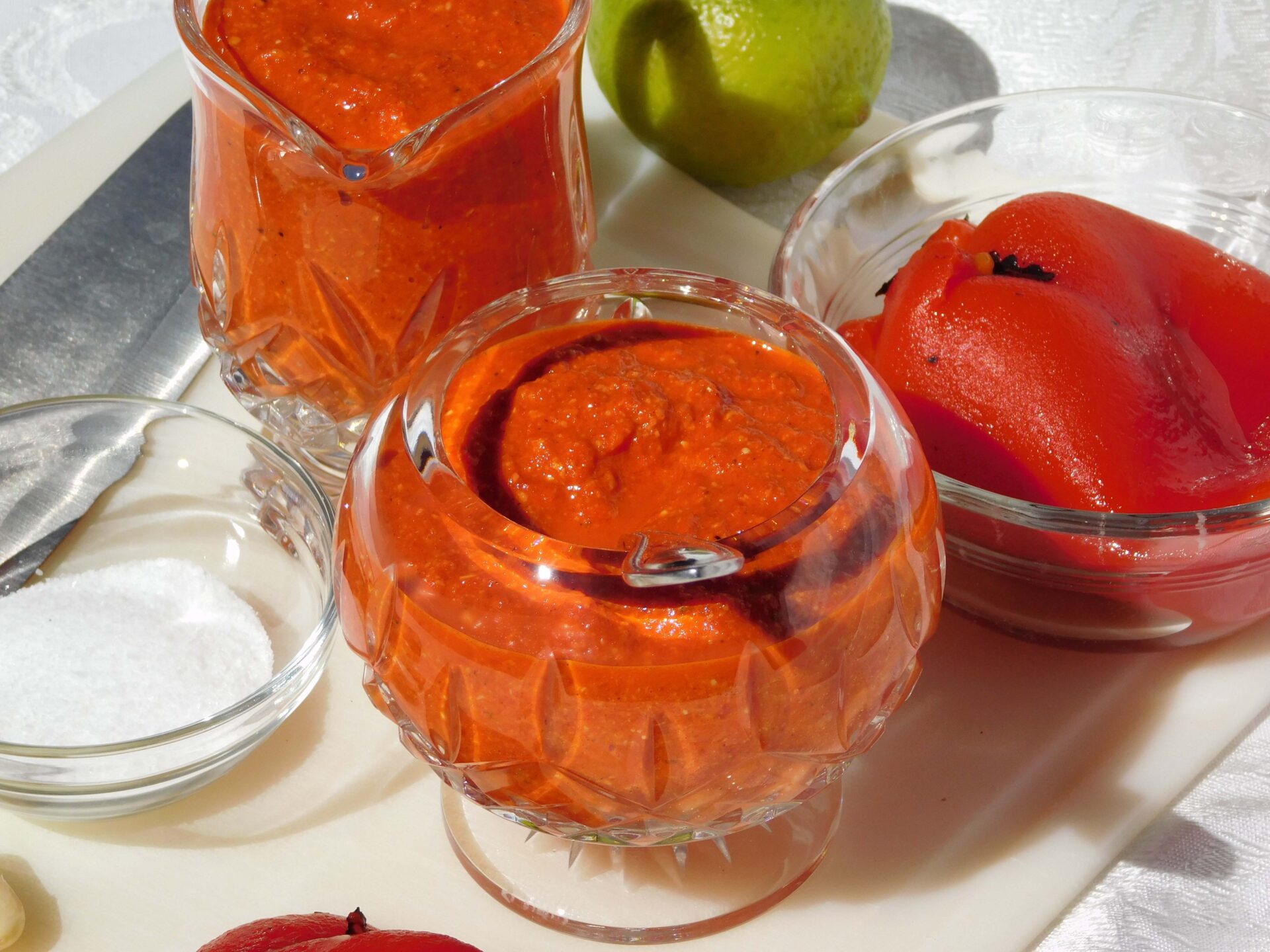 Roasted red peppers may be made from scratch by placing them on an open flame and turning them as the skin blisters, or by roasting in the oven until the peel separates from the pepper flesh. But it’s easier to purchase them already roasted and peeled at the olive bar, or in 12-oz jars sold in the Italian specialty section of the local grocery store.
2 (12-oz jars) roasted red peppers (3 c)
2 cloves garlic, peeled
1/4 c toasted pine nuts
Juice from one lime
1/2 tsp kosher salt
To toast the pine nuts, heat a skillet on the stove for about 2 to 3 minutes. Add the pine nuts in a single layer without any oil. Shake the pan and turn the nuts with a wooden spoon until they turn golden. Once they start to toast, shake continuously and remove skillet from heat before the nuts over-cook. Cool completely.
Drain the peppers and remove any remaining seeds. Combine all ingredients in a food processor or blender and pulse until combined and smooth. Store in a sealed container in the fridge up to a week.
VARIATION: Add one or two leaves of fresh basil.
Laurie Triplette is a writer, historian and accredited appraiser of fine arts, dedicated to preserving Southern culture and foodways. Author of the award-winning community family cookbook GIMME SOME SUGAR, DARLIN’, and editor of ZEBRA TALES (Tailgating Recipes from the Ladies of the NFLRA), Triplette is a member of the Association of Food Journalists, Southern Foodways Alliance and the Southern Food and Beverage Museum. Check out the GIMME SOME SUGAR, DARLIN’ website and follow Laurie’s food adventures on Facebook and Twitter.
Follow HottyToddy.com on Instagram, Twitter and Snapchat @hottytoddynews. Like its Facebook page: If You Love Oxford and Ole Miss…
*This story originally ran January 31, 2017.
 SOUTHERNISM OF THE WEEK
Stiff-necked: A person who’s stubborn and unyielding in a belief or action, who’s just about got their knickers inappropriately in a twist over something…. Like those hard-to-control oxen that just might end up in the ditch, or the rebellious Israelites who disregarded God’s instructions while He and Moses were in conference, or those old Boston Brahmins looking down on the riffraff from Nob Hill. Seems like everybody in the U.S.A. is stiff-necked about something or another right now.
Hello again, World. Let’s Get Cooking.
This Oxonian had to take a time-out in January. After a frenetic, stem-winding 2016, my head felt like it was about to explode from too much travel… too many holidays … too much rich or exotic food … too much political strife … too many memories of folks gone to the Great Beyond.
“Enough,” I thought while updating Christmas card lists, packing away holiday decorations and deep-sixing yet another unfulfilled annual to-do list. As Crash Davis said to Annie Savoy in the final scene of Bull Durham, “Right now I just wanta be. “
And “BE” I did — for three glorious weeks.
I ate well but simply — breakfasting on shirred eggs, lemon curd tarts, or buttermilk bread with fresh-made raspberry jam; lunching on simple salad or pan-sautéed greens; and dining on cheese and crackers.
I read the new and antique cookbooks purchased throughout 2016 that had begun toppling, untouched, off the chair beside the baker’s rack. I actually looked at and read a backlog of magazines, restraining myself from tearing out marginally interesting recipes. I went to the movies. Hacksaw Ridge, Fences and Hidden Figures definitely deserve those Oscar nominations. I binge-watched my favorite tv series. OMG, Sherlock, did you REALLY kill off MARY? I cleaned out the fridge and pantry, and rearranged underwear drawers. I even organized my files (again).
But now it’s time to come back to reality. You know reality. Where the tax files are calling your name, waiting to be completed for the accountant. And where long suffering loved ones are praying for a home-cooked meat-and-three — or even just some cooked meat to go with the cheese and crackers.
Time-out is over. The Life Meter Clock is ticking again, telling me to hoist my cast iron skillet and re-embrace my old K.I.S.S. culinary philosophy to ‘Keep it Simple, Stupid.” After all, Super Bowl week is now upon us, and Valentine’s Day and Mardi Gras are fast approaching.
K.I.S.S. (With) A Roast For Friends And Family
Want to truly K.I.S.S. in the kitchen and soften up a few stiff necks at the same time?
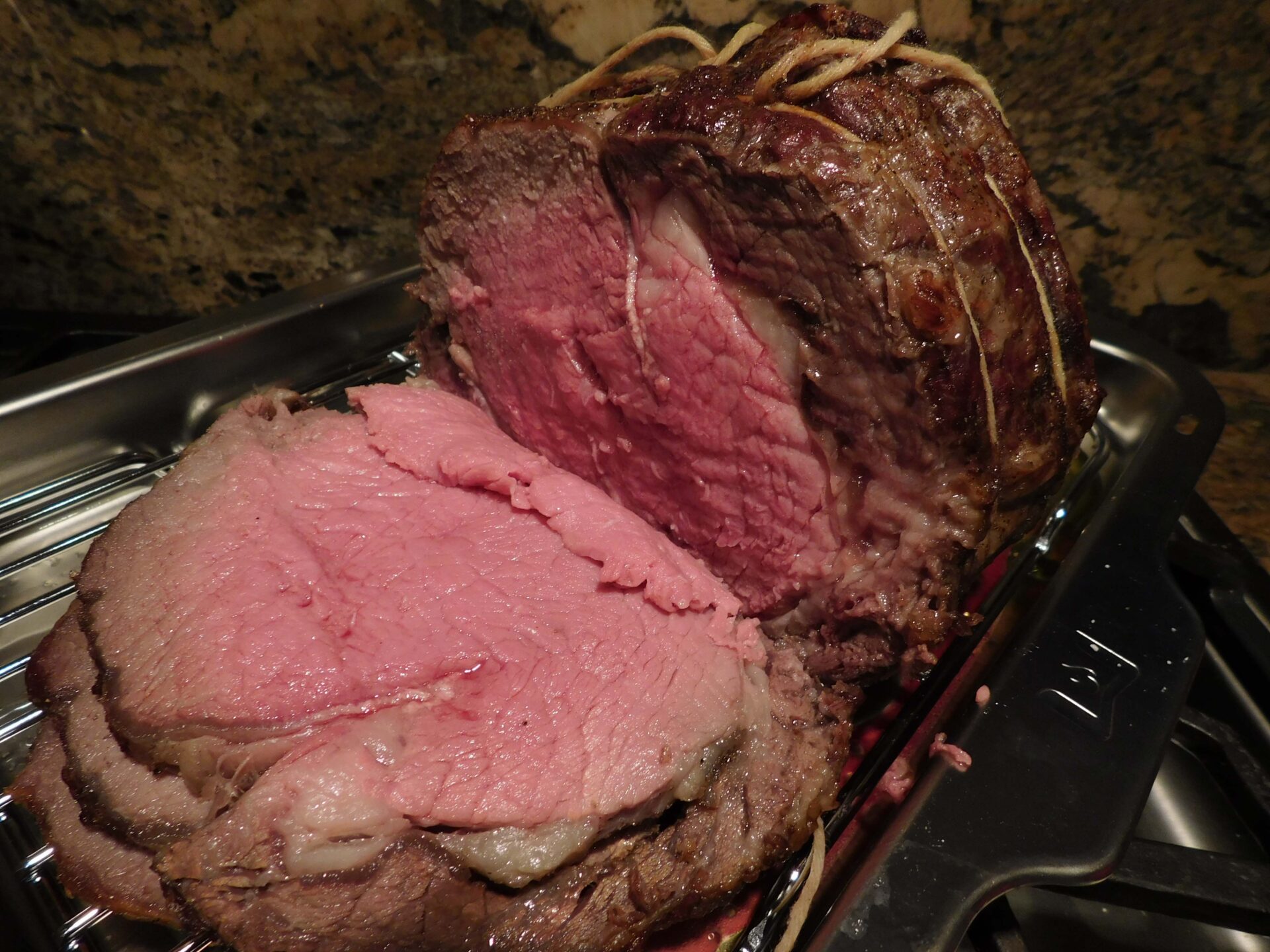
Here’s how. Cook up a succulent standing-rib roast, and pair it with simple veggies and a luscious dessert. Dinner doesn’t get more elegant or satisfying than this combination.
Standing-rib roasts are not cheap, but sometimes are offered on sale. For example, in December, Kroger’s had a holiday special priced at $6.99 a pound, compared to the corresponding price of $14.99 at Costco, and year-round price of anywhere from $27/pound to $60+/ pound at various retailers such as Williams Sonoma or Omaha Steaks.
The first thing to do is understand what makes a standing rib roast different from other roast cuts. A standing rib roast is also known as a prime rib, and both terms are related to a classic butcher cut along the backbone of the cow.
Do not confuse “prime” grade beef with prime rib.
The term prime rib refers to the butcher cut from the “prime or primal” or superior portion of meat along the backbone that includes the sixth through 12th ribs. These seven ribs generally are further subdivided into groups of 3 or 4 ribs in a cut because altogether they weigh 20 to 30 pounds.
Ribs 6-9 are called the chuck end, “blade cut” or “second cut” standing rib. Ribs 10-12, near the sirloin cuts at the back end of the beef, are called the “first cut” or “small end” or “loin cut.” The loin end ribs are more naturally tender, containing more of the “eye” of the tenderloin; but the blade cut ribs contain more marbling and if roasted low and slow, will be tender and with stronger natural flavor.
The “standing rib” term refers to cooking the roast with the rib bones turned down to form a natural rack for cooking.
If you turn a rib roast and look at it from the muscled end, you will notice a thick arching vein of fat that runs inside an outer-edge curved strip of meat. This section, including both the outer strip of meat and the vein of fat, is called the rib cap. A ribeye roast is achieved by cutting away the cap and its attendant fat vein. If cutting it yourself, be sure to save the rib cap for a second delicious meal.
A three-rib “blade-cut” standing rib roast weights about 6 pounds and will feed six to eight people. Feel free to roast it bone-in, or with the bones removed. NOTE: Bones do not add flavor when roasting this cut, but they can interfere with development of a flavorful crust and can skew the overall doneness of the roast because the bone end of the meat will take longer to cook than the boneless end. Also, boneless roast is easier to carve. Just make sure to keep the bones if cutting them away from the roast. Those rib bones make good eats and great gravy when roasted on their own!
My recipe for making a delicious standing rib roast calls for three steps: (1) Dry-brining the meat to transform and tenderize the tissue proteins through absorption of salt; (2) slow roasting the meat; and (3) reverse-searing the meat at the end of the cooking process.
Beef Doneness
The thickness of the cut of meat, rather than the weight, determines how long to cook the meat to a certain degree of doneness. Of course, the starting temperature of the meat (straight out of the refrigerator or room temperature), amount of bone in the meat, humidity in the cooker, type of cooker, and amount of fat in the meat (fat cooks faster, bones cook slower).
Rare: Seared around edges, red interior (heated to 125˚F)
Medium Rare: Seared outside, pinkish red interior (heated to 130-135˚F)
Medium: Pink center surrounded by brown meat (heated to 145˚F)
Medium Well: Faint pink color throughout (heated to 155˚F)
Well: Solid brown color throughout (heated to 165˚F – a degree of doneness considered ruinous by many beef aficionados)
Standing (Prime) Rib Roast
The optimal internal serving temperature of this type of roast is 130-135˚F, which is medium-rare — when the meat is at its most tender and flavorful. If desiring more doneness, add 5-minute increments to the internal temperature PLUS 20 minutes for the searing at the end. Examples: 145˚F = internal temperature of 120˚F PLUS searing; 155 ˚F = 130-135˚F PLUS searing; 165˚F = 140-145˚F PLUS searing.
2-7 ribs, sheet of fat trimmed off (3 to 4 ribs are preferred)
2 to 3 T fine kosher salt
2 T ground black pepper
2 tsp ground thyme
1 tsp garlic powder
1 tsp onion powder
1 tsp paprika
1/4 tsp cayenne powder, to taste
The roast will have a curved side covered by a cap of fat, and the opposite side will be the rib bones. Trim away the cap of fat and the underlying silver skin membrane. Determine whether to retain the ribs on the roast or whether to cut them away. If removing the ribs, retain for future use, or for making gravy. Tie up the roast with kitchen twine, making it as round as possible to allow for even cooking.
Pat the meat dry and generously sprinkle and rub with kosher salt over all exposed surfaces. Do not overdo the salt, as all the salt will be absorbed into the meat. Place in a tray and cover with foil or plastic wrap. Store in fridge for minimum of six to 24 hours. This is the dry brining stage that tenderizes the meat. I once left a roast dry brining in the fridge for up to 4 days with no ill effects.
Combine the remaining seasonings and store until ready to cook the roast.
Preheat oven to 225˚F. Remove roast from fridge and dust it with the seasoning rub. Allow it to sit for 20-30 minutes, until it comes up to room temperature.
Position roast on a flat rack (not one of those curved ones) set over a roasting pan. Place roast in center of oven and slow roast it for 30 minutes per inch of thickness until center of roast reaches 115˚F. (Check center temperature with a reliable meat thermometer.)
At 115˚F, remove roast briefly from oven, turn on broiler and adjust shelves so that roast will be positioned about 3 inches from the broiler when returned to the oven. Put the meat under broiler and watch with oven door open, making a quarter-turn as soon as the roast top starts crisping and sizzling. It should be about 5 minutes. Repeat three times until top, bottom and both ends (all 4 sides) have been seared under the broiler. Remove from oven and serve immediately with gravy made from the pan drippings.
Laurie Triplette is a writer, historian and accredited appraiser of fine arts, dedicated to preserving Southern culture and foodways. Author of the award-winning community family cookbook GIMME SOME SUGAR, DARLIN’, and editor of ZEBRA TALES (Tailgating Recipes from the Ladies of the NFLRA), Triplette is a member of the Association of Food Journalists, Southern Foodways Alliance and the Southern Food and Beverage Museum. Check out the GIMME SOME SUGAR, DARLIN’ website and follow Laurie’s food adventures on Facebook and Twitter.
Follow HottyToddy.com on Instagram, Twitter and Snapchat @hottytoddynews. Like its Facebook page: If You Love Oxford and Ole Miss…
*This story originally ran on HottyToddy.com June 30, 2017.
SOUTHERNISM OF THE WEEK
To love on: The action of being lovey-dovey with another person, including physical petting, hugging, kissing and making generally mushy-sounding small talk, including baby words. Related to lovin’, which is an action verb that applies to favorable consideration of activities, attitudes, people, places and things.
Folks around here love chicken on a stick.
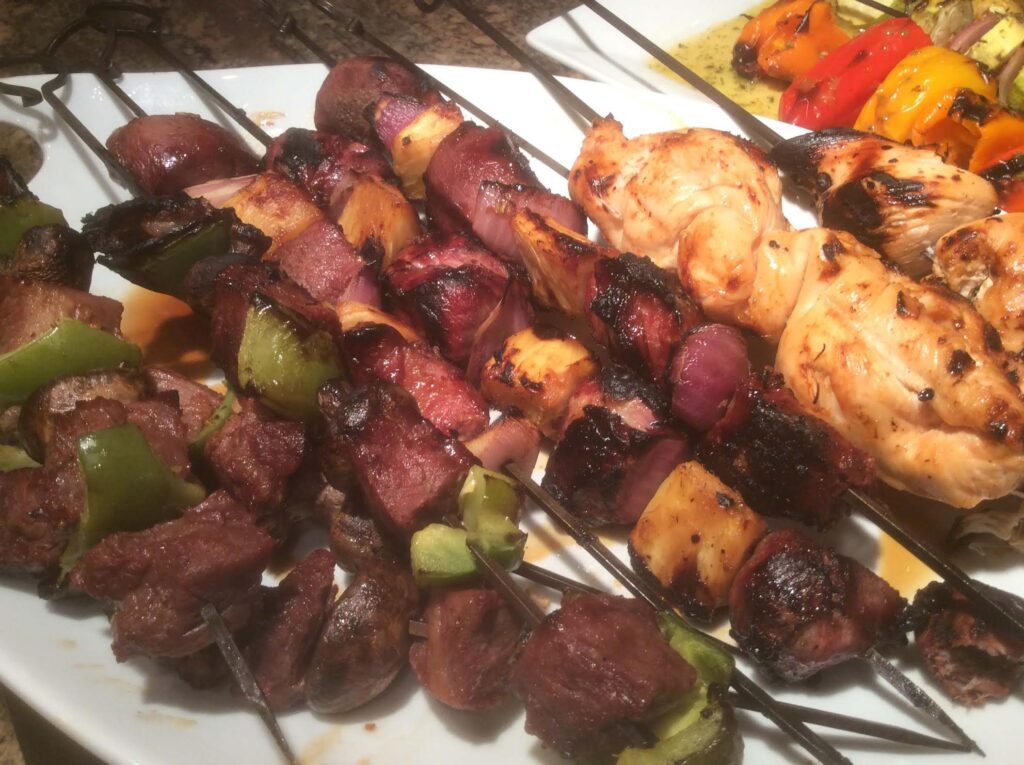
In fact, we’re sort of famous for the popular local protein-on-the-run.
It’s a fact, though — Oxonians didn’t invent chicken on a stick. It’s not even the first food ever threaded on a stick.
Humans have been applying the food-plus-stick-plus-fire concept to anything that runs, flies or swims since the first upright primate figured out that grilled food is tastier than raw. In communities on every habitable continent (Antarctica is excluded to date), people have their favorite forms of stick-grilled food, often produced over open flames on busy streets. Think about popular variations such as kebabs and brochettes.
However, I claim that our Southern ancestors perfected the art of stick grilling when scavenging for food during lean times. They discovered that stick-grilled foods provided the perfect vehicle for flora-based rubs and marinades concocted for the purpose of hiding inherent flavor flaws. Think roasted raccoon or opossum and sweet potatoes. Or – as our Vicksburg ancestors discovered during the terrible siege – roasted rat.
The concept stuck, so to speak. And like all shortcut-loving Americans, we modern Southerners love converting otherwise “normal” fork cuisine into fast food.
As some wag once pointed out, “necessity is the mother of invention.”
Summertime is here to stay, and the weather’s too soupy to turn on the stove. It’s time to get creative. Salads, desserts, side dishes and meat courses all adapt beautifully to the stick. But note: Use metal skewers instead of the inexpensive bamboo ones if the food requires grilling. Save the wooden skewers for the cold foods.
SKEWER THIS!
CAPRESE SALAD ON A STICK
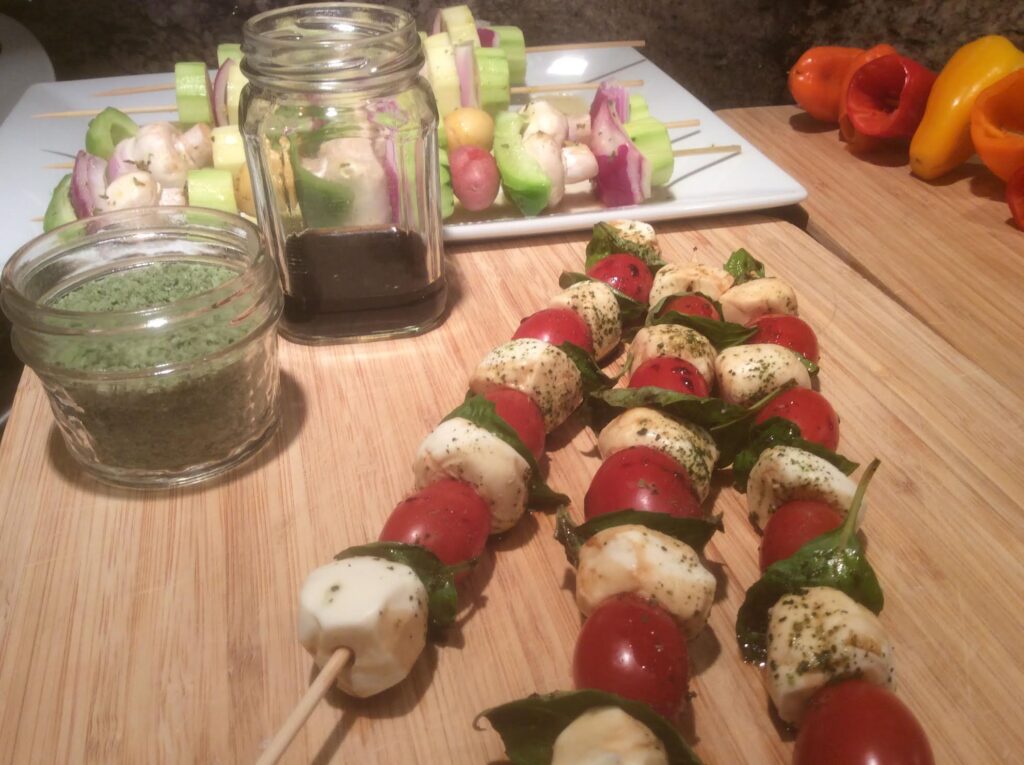
5 T fine-chopped basil
1 tsp garlic powder
2 T large-crystal sea salt
Cherry tomatoes
Mozzarella balls
Large basil leaves
Balsamic vinegar
1 T olive oil
Fine-chop fresh basil and spread out on a cutting board to dry for about an hour. Scrape into a large bowl and combine with the garlic powder and sea salt until they become a blended rub.
Whisk together the balsamic and olive oil. Skewer tomatoes, basil leaves and mozzarella balls onto wooden picks, alternating until about three of each line the pick. Over a wax-paper lined pan, drizzle skewered salad with the balsamic oil and roll to coat all sides. Sprinkle with basil-garlic-sea salt rub and serve.
SKEWERED WATERMELON-STRAWBERRY-CUCUMBER SALAD

1/2 c apple cider vinegar
1/4 c olive oil
1/2 c sugar
1 tsp poppyseeds
1/4 tsp salt
1/8 tsp black pepper
Watermelon chunks
Cucumber rounds, cut 1/2-inch thick
Sweet onion wedges
Large strawberries, capped and halved lengthwise
Green leaf lettuce leaves
Crumbled feta cheese
Whisk the first 6 ingredients until blended. Combine Veggies and fruit in a large bowl and add the dressing. Toss to blend. Refrigerate, covered, until 30 minutes before serving. To serve, thread on wooden skewers. Serve on a bed of green leaf lettuce, sprinkled with crumbled feta.
LEMON-THYME GRILLED VEGGIES

For a Latin flavor, substitute lime juice for the lemon, large jalapeño peppers for bell, and minced cilantro for thyme.
2 T fresh lemon juice
1/4 tsp lemon zest
1 tsp chopped fresh thyme
2 tsp Dijon mustard
1/2 tsp salt
1/2 tsp black pepper
2 T honey
1/4 c extra virgin olive oil
Bell peppers, cut into large wedges
Zucchini rounds
Onion wedges
Button or small portabella mushrooms
Butter lettuce leaves
Whisk lemon juice, chopped thyme, mustard, honey and seasonings together in a small bowl until emulsified. Add olive oil in a steady stream, whisking to blend until smooth. Thread bell peppers, zucchini rounds, onion wedges and mushrooms on skewers, alternating, with the pepper wedges serving to hold the more fragile veggies intact. Grill on hot grill, turning 4 times during 15-20 minutes, until all sides have been charred. Remove from grill, rake off into large butter lettuce leaves and drizzle with more lemon-thyme dressing. Top with salt and pepper to taste.
HONEY LIME CHICKEN ON A STICK
1 c lime juice (about 5 limes)
1/2 c orange juice
1/4 c honey
1 to 2 tsp chili powder
1-1/2 tsp garlic powder
2 tsp kosher salt
1 tsp black pepper
3 boneless skinless chicken breasts, halved lengthwise
Combine all ingredients except the chicken. Whisk to blend. Submerge the chicken in the marinade and refrigerate, covered, at least 2 hours. Thread the chicken on metal skewers; grill 4 minutes on medium-high heat; turning two to three times after 3 minutes, until center of chicken is 160˚F (opaque when cut). Serve while hot. Refrigerate leftovers and toss with leftover watermelon-strawberry-cucumber salad.
BRANDING IRON BEEF
1 T barbecue dry rub of choice (I use Rendezvous)
1 c apple cider vinegar
1/4 c extra virgin olive oil
1-1/2 T Worcestershire sauce
1 T fresh squeezed lemon juice
2 T garlic, minced
2 tsp brown sugar
1-1/2-inch-thick steak, cut into cubes
Baby Bella mushrooms
Onion, sliced into 1-1/2-inch cubes or wedges
Combine dry rub of choice with vinegar and whisk in oil, Worcester, lemon juice, mustard, garlic and sugar until blended. Pour marinade over beef in a large sealable bag. Seal and shake to coat evenly. Refrigerate at least 4 hours, turning the bag at least once.
Thread beef onto skewers, alternating with bellas and onion. Discard marinade. Grill on medium-hot grill, turning a quarter turn about every 3 minutes to sear all sides. Ready to eat when center of beef registers 125-130˚F.
PINEAPPLE POKE PIGGY
1 c soy sauce
1/2 c light brown sugar
2 tsp kosher salt
1/2 c apple cider vinegar
1/2 tsp garlic powder
1 c peach preserves
2 lb large cubes of pork (loin or carnitas chunks)
Large cubes of pineapple
2 bell peppers, cut into large cubes
Cherry tomatoes
1 onion, cut into 1-1/2-inch wedges
Combine first 6 ingredients and bring to a boil. Cool and add the pork chunks. Marinate in fridge, covered, for 4 hours. Thread pork onto skewers, alternating with pineapple and bell pepper chunks. Grill 4 minutes per side on a hot grill, lid closed, turning at least three times, until center of meat reaches 145˚F.
Laurie Triplette is a writer, historian and accredited appraiser of fine arts, dedicated to preserving Southern culture and foodways. Author of the award-winning community family cookbook GIMME SOME SUGAR, DARLIN’, and editor of ZEBRA TALES (Tailgating Recipes from the Ladies of the NFLRA), Triplette is a member of the Association of Food Journalists, Southern Foodways Alliance and the Southern Food and Beverage Museum. Check out the GIMME SOME SUGAR, DARLIN’ website and follow Laurie’s food adventures on Facebook and Twitter.
Follow HottyToddy.com on Instagram, Twitter and Snapchat @hottytoddynews. Like its Facebook page: If You Love Oxford and Ole Miss…
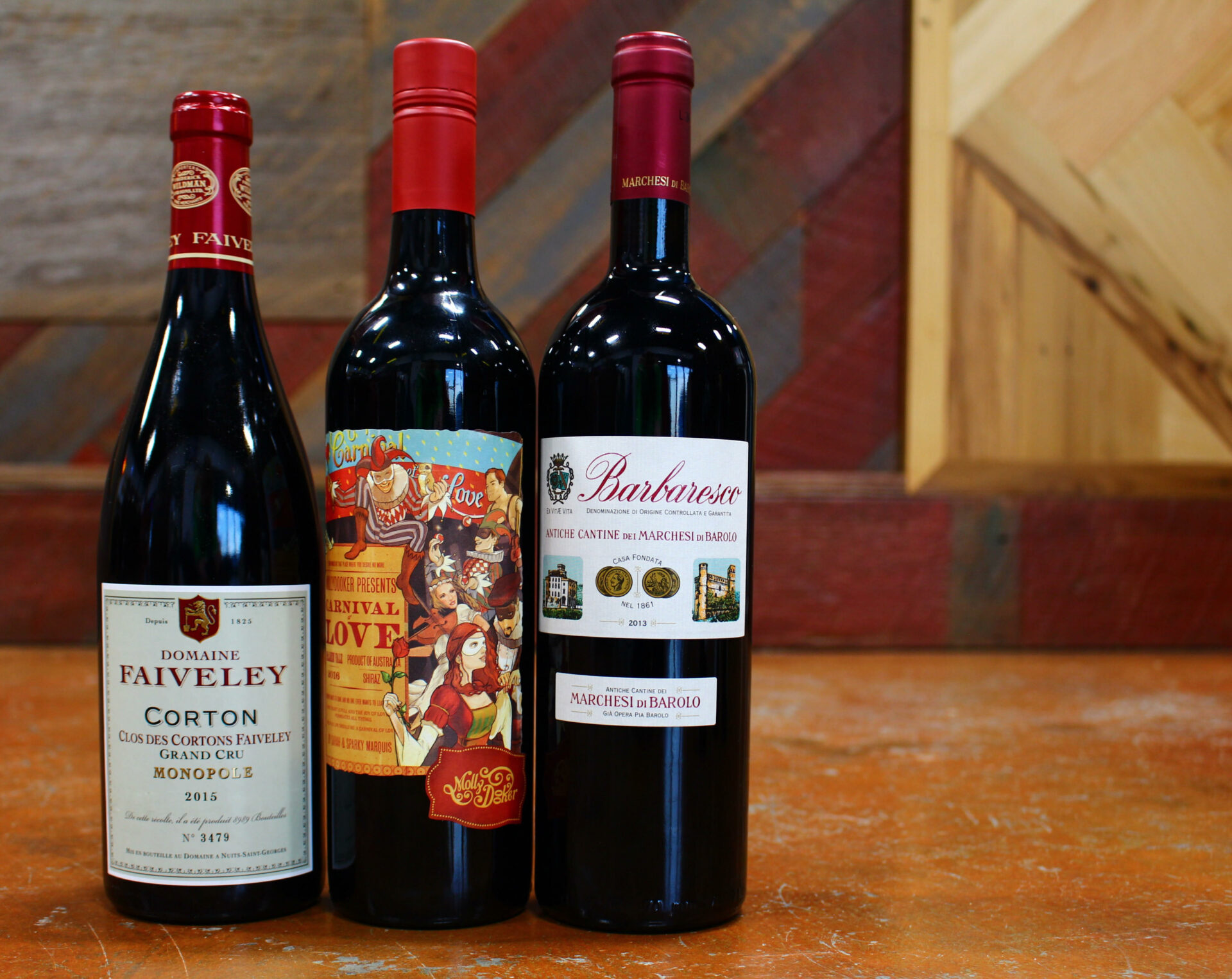 With soon-to-be 15 countries represented in its wine inventory, High Cotton Wine and Spirits Warehouse’s Aaron Herrington recently told HottyToddy.com’s Steve Vassallo about the new international wine selections.
Vassallo: You are now carrying a large selection of fine wines. Is this unusual to have such a broad selection?
Herrington: It is unusual, only because we’re in Mississippi. Many states have huge franchise stores that offer selections as large as 8,000 different wines, but Mississippi laws prevent individuals from having multiple liquor permits; that is why we decided to go so big. We only can have one store, so our aspiration is to have the biggest, brightest store and slowly work toward curating the best selection in the state.
Vassallo: The popularity of wines from South Africa seem to be on the rise. Care to elaborate?
Herrington: The wines of South Africa straddle Old World and New; the wines often smell of ripe, silky fruit, but showcase earthy flavors, blending elegance and power. If you enjoy white wines, start with a South African Sauvignon Blanc. They are an excellent illustration of the New World/Old World blend. Many Sauvignon Blancs from South Africa combine herbaceous notes and rich fruit. If you prefer red wines, try a nice Pinotage. Good examples of Pinotage combine blackberry and cherry flavors with roasted herbs and hints of smoke. Pinotage is a socialite when given the chance, and it’s medium to full-bodied nature make it easy to pair with almost any food you can think of.
Vassallo: Wines from Chile and Argentina bring an added dimension to your inventory. Why do you believe wine from these two countries are so popular?
Herrington: Chile and Argentina are neighbors that tend to develop wines with wonderfully juicy and ripe fruit flavors, but that is where many of the similarities end. Argentina produces more than 75 percent of the world’s Malbec wines, and they tend to produce wines with more New World methods, while Chile produces some great Bordeaux blends in styles more similar to Old World wines. Both countries offer wonderful Cabernet Sauvignon that are a nice change from your typical California Cab.
Vassallo: For those palates that prefer the drier wines, what are several recommendations you could extend?
 Herrington: For those seeking drier juice, High Cotton Wine and Spirits has a number of items. A solid French Bordeaux blend is a great place to start. Blends with more Cabernet Sauvignon will have grippier tannins while those blends that favor Merlot tend to have softer tannins and more red fruit notes. An excellent grape for those seeking a drier experience is the Nebbiolo. This Italian grape is naturally high in tannins, full-bodied and has a high acidity. Typically Nebbiolos are labeled by regional names, such as Barbaresco, Barolo, etc. Ask for the Barbaresco by Marchesi di Barolo. It pairs wonderfully with red meats, stews and pasta dishes!
Vassallo: Another region of the world that is catching momentum is down under. What makes the wine originating in New Zealand and Australia so special?
Herrington: For a long time, Australia and New Zealand were one-trick ponies. Australia had its Shiraz, and New Zealand had its Sauvignon Blanc. None of that is true any longer. Both Australia and New Zealand have a lot of different varietals to offer, such as the elegant Cabernet Sauvignons of Western Australia and the tart Pinot Noirs of Marlborough. Australia enjoys a diverse climate across its different wine growing regions, and that gives oenophiles a lot of choices within the same varietal.
Vassallo: Are French and German wines in decline or are the other countries simply closing the lead that these two countries have enjoyed for decades?
Herrington: French and German wines are still some of the best wines in the world, but the gap has definitely closed. There are hundreds of new wines that hit the market every day, and with the advent of online ordering and delivery, it has become increasingly easy to expose one’s self to a variety of wines from all over the world. Of course, one cannot order alcohol online for delivery in Mississippi. A dry Riesling from Germany can break open a world of enjoyment to even the most barricaded red wine drinker, and a red Bourgogne (pinot noir) from France is a wonderful change for the typical California Pinot Noir drinker. Bourgogne’s with the Grand Cru classification can be some of the most expensive and exceptional wines crafted. They age well, and make great gifts.
Vassallo: With all the recent fires in California, has this situation adversely impacted supply at all?
Herrington: There will be some impact on future vintages due to the California fires, but currently the impact does not deal with the quality of the grapes, but in the transportation. The fires caused a lot of logistical difficulties, particularly for trucking out of California to the rest of the U.S. Mississippi is a centrally allocated and distributed state. So the longer it takes trucks to arrive, the longer it takes for MABC to load and inventory those products. This has led the state to be out of a number of items for longer than we typically experience.
High Cotton Wine and Spirits Warehouse offers a unique experience in the ability to select wines from so many different continents. Located at 2216 West Jackson (directly behind Rebel Rags), High Cotton’s wine inventory is one of the largest to be found anywhere!
 Steve Vassallo is a HottyToddy.com contributor. Steve writes on Ole Miss athletics, Oxford business, politics and other subjects. He is an Ole Miss grad and former radio announcer for the basketball team. Currently, Steve is a highly successful leader in the real estate business who lives in Oxford with his wife Rosie. You can contact Steve at sovassallo@gmail.com or call him at 985-852-7745.
For questions or comments, email hottytoddynews@gmail.com.

Hunter Elliott Joins Elite Ole Miss Company in Win Over Texas A&M

Ole Miss Softball Lands Two Players on All-SEC Second Team

How to Watch Ole Miss Baseball’s Crucial SEC Opener Against Texas A&M


-
Eating Oxford12 years ago
Food & Drink: What’s Hot and What’s Not in 2015
-
Arts & Entertainment9 years ago
EatingOxford: 3 Steps to Success at 3 Blind Wines
-
Eating Oxford11 years ago
HottyToddy Tailgate: Crescent Rolls 5 Ways
-

 Eating Oxford4 years ago
Oxford restaurants adjust to inflation, other pressures by raising prices
-
Eating Oxford13 years ago
My Michelle’s: Personal Chefs
-
 Eating Oxford4 years ago
Locally Driven and Focused to Serve from Day to Night: Good Day Café & Bar Muse
-
 Eating Oxford4 years ago
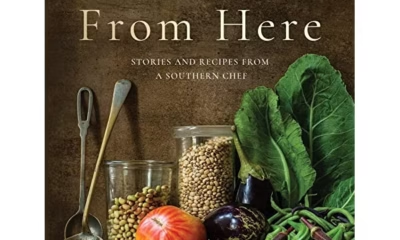
“I am from here”: Snackbar Chef Vishwesh Bhatt celebrates new cookbook
-
Eating Oxford10 years ago
Oxford Stories: Chicken on a Stick Is an Oxford Tradition