
Eating Oxford
Is Sugar Killing Us? Maybe

By Laurie Triplette
ldtriplette@aol.com
Natural Sweeteners Versus Artificial Sweeteners
During 2014 The Old Bride intends to explore trends in food science and preferences, and to share my findings with our readers. We’ll check out the wheat belly/no-gluten diet, the Paleo diet, food allergies and sensitivities, and other hot topics. In the works for months, my first food-and-health topic focuses on sugars and sugar substitutes. Who knew the sugar issue would publicly explode this week. Thanks go to Dr. Kathy Knight, Janie W. Cole, and Emmy Parkes of the UM Department of Nutrition and Food Sciences for their input.
Some Heartbreaking Truths About Sweeteners
Is sugar killing us? Maybe.
A flurry of news media reports this week proclaim that added sugars in our foods might hold a fatal attraction that can cause heart stress and related coronary problems. The media coverage came in the wake of research conclusions published online Monday, Feb. 3, in the Journal of the American Medical Association / JAMA, formerly the Archives of Internal Medicine.
The report details extensive studies of data collected nationally between 1988 and 2010 from the National Health and Nutrition Examination Survey (NHANES). The NHANES data, updated annually by the U.S. Centers for Disease Control and Prevention (CDC), were examined by researchers at Emory University School of Medicine with the CDC and Harvard School of Public Health. Their first findings were published in 2013 in the Journal of the American Heart Association.
According to Quanhe Yang, lead-study co-author of the latest report and epidemiologist at the CDC, this is the first nationwide study to link Americans’ consumption of added sugar with their risk of dying from heart disease. The study takes into account the individuals’ weight, age, health, diet and exercise habits. Previous research studies already had linked sugar consumption to diabetes, weight gain, and obesity.
Yang states that about 37% of our daily added sugars occur in the form of sweetened beverages, with the rest coming from sugars added to processed foods, including grain-based desserts, fruit drinks, dairy desserts, and candy. Naturally occurring sugar is not considered added sugar. Naturally occurring sugar comes from fresh fruits and natural fruit juice, milk and dairy products, or from vegetables.
The CDC report published in 2013 revealed that just one molecule of glucose metabolite glucose-6 phosphate (G6P) can lead to a improper heart function. G6P build-up is inevitable from consumption of too much sugar and starch (which converts to sugar).
An over-buildup of G6P leads to high blood pressure, high triglycerides (high cholesterol), and overall heart-muscle stress.
The latest report contains data indicating that people who consumed the most added sugar daily — around 20% or more of their daily caloric intake — were twice as likely to die from heart disease as those who consume less than 10% in added sugars. According to the JAMA article, those with caloric intake of 19% in sugars had about a 38% higher risk of dying from coronary disease.
The Emory-CDC researchers found that the average American consumes about 15% of our daily calorie intake as added sugars. This means that in a daily 2,000-calorie diet, one 140-calorie soft drink equals 7% of added-sugars consumption. Each person’s body is different, so even one soft drink daily could dramatically impact heart health in some individuals. But seven or more servings of sugar-sweetened beverages each week definitely link increased risk of dying from coronary heart disease.
“We’ve all heard many conflicting statements about sugar and how bad it is for us,” said Kathy B. Knight, PhD, RD, Associate Professor and Interim Chair of the Department of Nutrition and Hospitality Management at Ole Miss. The Old Bride interviewed Dr. Knight in her campus office on January 23.
“Too much sugar is bad for us. But there’s still a lot of misinformation in the public about sugar. We’ve heard that there is a standard daily limit to the amount of sugar an individual should consume and remain healthy. This is not true. There is no standardized specific guideline for daily amounts of sugar that can be consumed safely,” she noted.
“Every person’s body is different. The nutritional requirements and limitations are different in every person’s body,” Knight said.
She cited some of the conflicting data: The Institute of Medicine recommends that sugar consumption be less than 25% of total calories. The World Health Organization recommends less than 10%, and the American Heart Association recommends fewer than 150 calories per day for men (about 9 teaspoons) and fewer than 100 calories per day for women (abut 6 teaspoons). U.S. dietary guidelines suggest that a healthy diet is one that is low in added sugars, limited to a combined daily caloric intake of no more than about 15% in added sugars AND fats.
In addition to conflicting guidelines regarding daily sugar and added-sugar consumption, Knight pointed out other myths regarding sugar. “For example, the public has been told that sugar causes hyperactivity in children. Not true. Food sensitivities and allergies are caused by proteins in the foods.“
What is true, added Janie W. Cole, RD, LD, of the University of Mississippi Nutrition Clinic, is that sugar is addictive.
“Sugar has been called a poison, a toxin … sugar gets a bad wrap when it’s really not bad at all in moderation.”
Medical experts all seem to agree on this one point: Sugar is addictive because it affects the brain much in the same way as morphine and other opioids. When isolating the effects of fat and sugar on our brains, the sugar impact was distinctly separate from the impact of fat, and the brain’s reaction/response to sugar was highly sensitive. (REFERENCE: Nicole Avena, PhD, a neuroscientist with the New York Obesity Research Center at Columbia University, and author of Why Diets Fail (Because You’re Addicted to Sugar)
Cole noted, “Sugar is harder to resist than any other food. We need it to function, which is why our bodies can synthesize it in our liver from fat, complex carbohydrates and protein. All sugars are carbohydrates composed of carbon, hydrogen and oxygen, and our body converts all carbohydrates into sugar.”
Simple sugars are monosaccharides, which include glucose (also known as dextrose), fructose, and galactose. Granulated sugars such as table sugar are a disaccharide known as sucrose, which hydrolyzes into fructose and glucose. Other disaccharides include maltose and lactose. Chemical substitutes known as artificial sweeteners are not technically a sugar.
Over-consumption of fructose — including high-fructose corn syrup — accelerates cellular damage and aging, according to Robert H. Lustig, MD, MSL, author of Fat Chance: Beating the Odds Against Sugar, Processed Food, Obesity and Disease and also of The Fat Chance Cookbook.. The cells die off faster than normal. Excess fructose in our system converts into liver fat. Lustig says a fatty liver and high percentage of rapid-death cells increases a body’s risks for cancer, cognitive decline, and other degenerative diseases.
“People always ask whether some natural sugars are better than others,” said Knight. “Sugar is sugar. None of the natural sugars are better or worse than the others. Some are just very expensive to grow or to refine.
When asked about the merits of high fructose corn syrup versus cane sugar, Knight pointed out that both metabolize the same way in our bodies. “But corn syrup is easier to use for food processing manufacturing, requiring less labor on the back end than granulated sugar. On the other hand, granulated sugar is better for baking because it aerates the batter and acts as a tenderizer.”
What about artificial sweeteners such as aspartame and saccharine?
Knight said that the original studies claiming that saccharin causes cancer have been proven to be overblown. Some of the chemical sugar substitutes and some of the other natural sweeteners such as agave or stevia have been known to trigger individual sensitivity or allergic reactions. For example, Aspartame has been proven to cause intolerance in some individuals because of the two amino acids it contains.
So why all the fuss about packaged and processed foods when discussing added sugar? It turns out that 80% of all packaged foods contain added sugar — even savory crackers and pepperoni. It’s added because sugar has antibacterial properties and also has flavor-stabilizing properties. Plus, it makes the foods taste more appealing to consumers.
All consumers should learn to read food labels on packaged foods. People who need to restrict their sugar intake need to identify the many forms in which it might be added to packaged foods. There are more than 50 names for different sugars that are added to our packaged foods. Those sugars include high fructose corn syrup, agave, molasses, caramel, dextrose, glucose solids, d-mannose, aspartame, sucrose, honey, and stevia.
Cole and Knight encourage consumers to limit their added-sugar intake. In order to control the added sugars, make your food from scratch, using fresh or flash-frozen ingredients.
Cole dismissed some recent claims that artificial sweeteners are as bad for diabetics as natural sugars.
“I definitely would recommend that a diabetic choose an artificial sweetener over a natural sugar if one must consume sweets once in a while. The point is moderation, meaning perhaps a diet soft drink once in a while. But not two or three times a day. Everything needs to be consumed in moderation. And that’s where it gets complicated because sugar, like salt, is addictive,” she said.
“It triggers something in our brains and we start to crave more of it. That’s why we often recommend doing without added sugars of any type, and start relying on a balanced diet containing only the natural sugars contained in fruits. We have found that when people go sugar free, they stop craving it, and can taste even the smallest amounts more distinctly,” Cole said.
Knight concurs. “The truth is that we don’t know that much about how much sugar is too much. So we should use moderation until we find out for sure. As we say, everything in moderation.”
Laurie Triplette is a writer, historian, and accredited appraiser of fine arts, dedicated to preserving Southern culture and foodways. Author of the award-winning community family cookbook GIMME SOME SUGAR, DARLIN’, and editor of ZEBRA TALES (Tailgating Recipes from the Ladies of the NFLRA), Triplette is a member of the Association of Food Journalists (AFJ),Southern Foodways Alliance (SFA) and the Southern Food and Beverage Museum (SOFAB). Check out the GIMME SOME SUGAR, DARLIN’ web site: www.tripleheartpress.com and follow Laurie’s food adventures on Facebook and Twitter (@LaurieTriplette).
[box style=”0″]
HERE’S THE RUNDOWN ON SUGARS
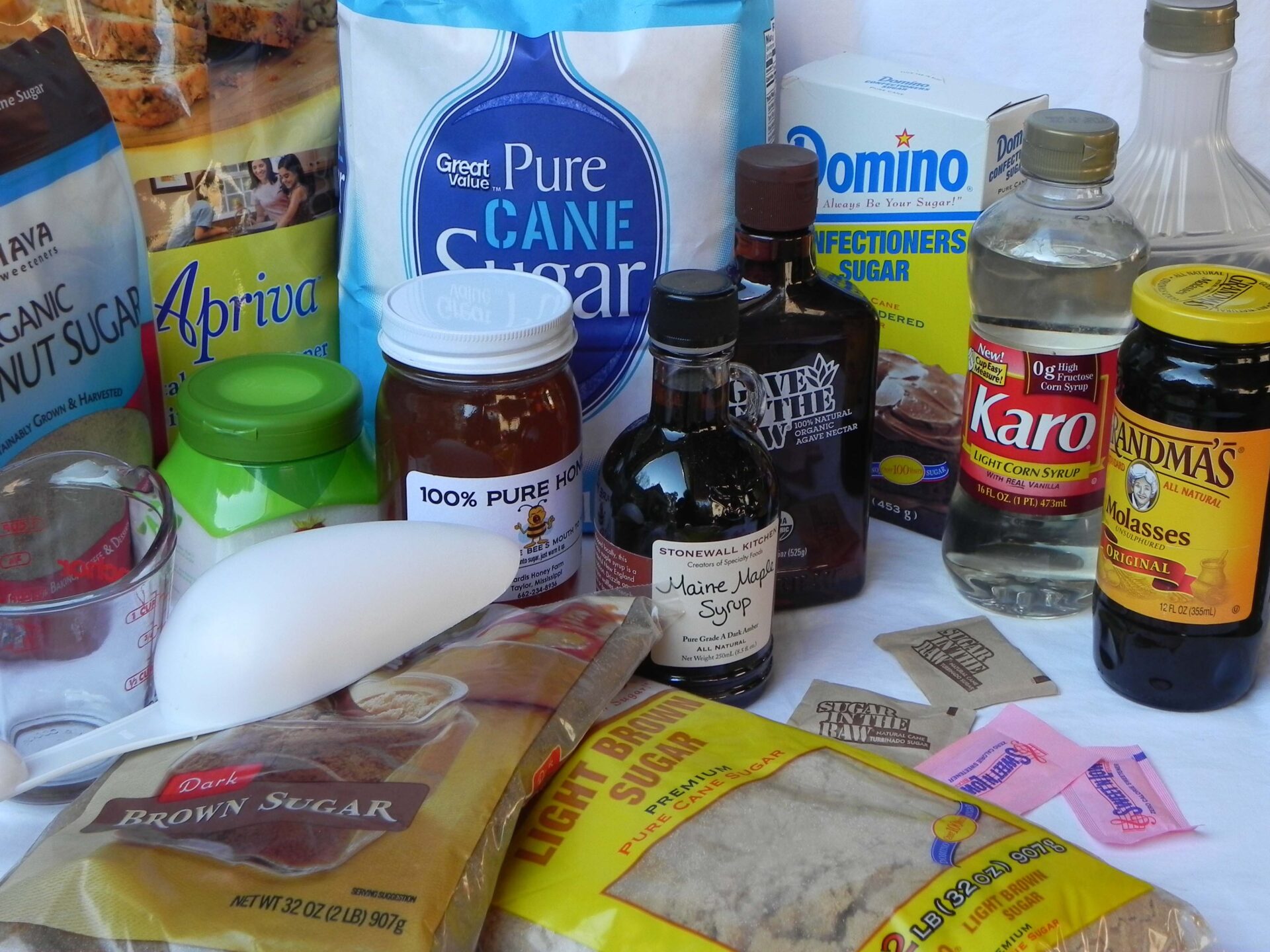
We consume natural sweeteners, added sugars, and artificial sweeteners in our foods. Natural sweeteners occur in foods such as fruits and vegetables, plants such as agave cactus, stevia plants, and maple trees, and in honey. “Added sugars” are sugars that have been refined in some way and added to our foods. Artificial sweeteners are not sugars at all, but are chemical compounds that taste sweet. The natural sweeteners can be in the form of crystals or syrups; some of the syrups are purely the result of refining sugar crystals, such as high fructose corn syrup; but most of the syrups are harvested as a natural liquid product such as honey, agave nectar, and maple syrup.
All refined sugars are equal in nutrition. This includes white granulated sugar, brown sugar, and the raw sugars such as turbinado. They are 99 percent sucrose, which is a simple carbohydrate. Brown sugars merely contain higher molasses content.
Some of the other natural sugars and sugar substitutes taste sweeter than refined sugar. Honey ranges 25 to 50 % sweeter. Stevia Reb A is highly purified from the stevia plant and is several hundred times sweeter than cane sugar. Agave nectar is 1-1/2 times sweeter than equivalent amounts of white cane sugar. Most artificial sweeteners are 100 times more intense than regular cane sugar. They are considered “non-nutritive sweeteners” because all but aspartame pass through our bodies without being digested. Aspartame is absorbed. There are no known side effects from this absorption.
Terms Referring to Sugars
Sugars: Naturally occurring carbohydrates that contain calories and raise blood glucose levels (the level of sugar in the blood stream). Examples: cane sugar, brown sugar, confectioner’s sugar, fructose, honey, and molasses.
Reduced-calorie sweetener: Sugar alcohols, which contain about half the calories of sugars, and considered a separate type of carbohydrate. Sugar alcohols can raise blood sugar levels, bit not as much as other carbohydrates. Examples: isomalt, maltitol, mannitol, sorbitol, xylitol (often used in sugar-free gum and candy).
Low-calorie sweeteners: Artificial sweeteners created in a lab as chemicals; considered “free foods” because they contain zero calories and do not raise blood sugar levels.
Terms Referring To Sugar Content In Foods
No sugar: Product contains no sugar. It MAY contain sugar alcohols or artificial sweeteners.
No added sugar: No extra sugar was added during processing, but original source may have contained sugar such as the fructose in fruit juice, and sugar alcohols or artificial sweeteners may have been added.
Sugar free: Product contains no sugars, but may contain sugar alcohols or artificial sweeteners.
Dietetic: Murky term, not defined by the Food and Drug Administration (FDA), and so can mean whatever the manufacturer decides; often to indicate that the product has reduced calories.
All natural: Another murky term, not defined by the Food and Drug Administration (FDA), and so can mean whatever the manufacturer decides; often to indicate that the product contains no artificial ingredients, but it may contain natural sweeteners such as sugars or sugar alcohol.
Types of Natural Sweeteners
Beet sugar
Similar to cane sugar, but made by extracting the sugar juice from beets and refining it to crystallize it. Beet sugar production requires more fossil fuels than cane sugar production.
Cane sugar
Readily available; farm production well established. Regular table sugar is sucrose, a crystal composed of fructose and glucose that are bonded together; it must be broken down in the body in order for the glucose and fructose to be absorbed in the body.
Cane syrup (Steen’s and other brands)
The syrup derived from pressing or otherwise extracting the juice from sugar cane and boiling it to condense it, but not to the point of crystallization.
Corn syrup (Karo light and dark, and other brands)
Corn syrup is chemically produced from corn starch mixed with natural enzymes that break the cornstarch down into glucose. It is heated to convert it into syrup. Light corn syrup has been heated less than dark corn syrup. The sugars in corn syrup are harder to process in our bodies than table sugar.
High fructose corn syrup (Generally a commercial-grade product used in food manufacturing)
Very sweet. The syrup is obtained by adding natural enzymes to corn syrup to convert some of the glucose into fructose; the two sugars are combined but not bound together, so they do not go through the digestive system, but directly into the bloodstream. The fructose goes directly into the liver, while the glucose triggers insulin spiking.
Coconut palm sugar
A good substitute for brown cane sugar, but farm sourcing has stirred controversy regarding environmental issues and impact on other desirable produce (coconuts)
Agave Nectar
The syrup created by extracting the sap from agave cacti, filtering it, and heating it to create light (less heat, more filtration) or dark syrup. Equivalent to corn syrup or honey. Fructose content varies by brand and type.
Brown rice malt syrup
Also known as rice syrup or rice malt, created by culturing cooked rice with enzymes; has a higher glycemic index than table sugar, and only slightly less than glucose.
Fruit juice concentrates
What remains after removing much of the water contained in the natural fruit juice. Be sure to check for additives; it is different from not-from-concentrate fruit juice.
Honey
A well known natural sweetener produced by honey bees, with a distinctive flavor and health benefits to consumers
Maple syrup
The syrup created by extracting xylem sap from various types of maple trees and processing it by heating to remove water; graded by degree of concentration of the sap. Consists mostly of sucrose, with some glucose and fructose.
Molasses
Thick, dark brown syrup created from raw sugar during the refining process; strong flavor.
Sorghum
A type of molasses made by extracting the green juice from the sorghum plant, which resembles sugar cane, and cooking the juice into syrup; very high in potassium and antioxidants, but strong flavor.
Stevia Rebandioside A (Stevia, Truvía)
Extract from the leaves of the stevia plant; readily available in the U.S.
Types of Artificial Sweeteners
Acesulfame potassium / acesulfame K (Sunett, Sweet One)
May be used in both hot and cold foods, including baking.
Aspartame (Nutrasweet, Equal)
Loses its sweetness at high temperatures, and is not good for baking. People with phenolketonuria should avoid it.
Neotame (n/a)
Saccharin (Sweet & Low, Sweet Twin, Sugar Twin)
Can be used both hot and cold.
Sucralose (Splenda)
May be used in both hot and cold foods, including baking. Often included in processed foods.
[/box]
Eating Oxford
The Velvet Ditch brings seafood and steady service to Oxford
A new hot spot offering seafood, bar favorites and steady service in a setting that fits both weeknights and game weekends

OXFORD, Miss. — The Velvet Ditch has become a regular stop for people looking for seafood plates, sandwiches and a sports-bar setting near the Oxford Square.
Its menu leans toward familiar items, and the service is one of the reasons diners say they return. The restaurant sits on South Lamar Boulevard, close enough to campus and the Square to draw steady traffic on most nights.
The interior features televisions, open tables and a bar that stays busy during major sporting events. Staff members move between areas at a quick pace.
A visitor can see at a glance that the restaurant is built to handle crowds during football weekends or spring baseball series.
The menu includes catfish, shrimp, burgers and pasta dishes. One food-travel site highlighted the “Catfish with Grits” and the “Lobster Mac and Cheese” as standout items.
Another review praised the staff, noting that a server “went above and beyond to ensure guests had a memorable experience.” Those comments help show why service is often mentioned in accounts from diners.
Guests also mention that the kitchen keeps wait times short. Even on harder nights, food tends to reach tables in a steady rhythm. For people on a schedule, that can be a deciding factor.
Some patrons report that visiting in the early evening brings a quieter atmosphere. Later hours often mean a louder bar setting, especially during games or campus events.
One commenter on social media wrote that the place was “packed” but said staff and management stayed active and remained helpful. That reflects a common pattern in local feedback.
The porch and outdoor seating add to the appeal, especially during fall and spring weather. The spot offers extra room for groups and keeps the dining room from feeling crowded when traffic picks up.
For diners seeking a consistent seafood option that works for friends, families or visitors, The Velvet Ditch meets those expectations without trying to be a fine-dining restaurant.
Most guests seem to accept it as a casual place where they can get reliable favorites.
Menu impressions and pacing
Portion sizes fall on the larger side. Some customers report leaving with leftovers, which adds value for a college-town audience.
Pricing falls within the range expected for a restaurant near the Square, though the seafood dishes push slightly higher than the sandwiches.
Most tables seem to order at least one fried dish. For people choosing wings or fried seafood, asking about crispness is a reasonable step.
One local blog gave the wings a 6.8 out of 10, citing texture but praising the seasoning and service.
It is not unusual for fried items to vary between busy and slow shifts, and guests sometimes adjust their orders based on earlier visits.
Pasta selections, including shrimp-based dishes, tend to draw positive remarks for flavor.
Several diners have shared online comments praising the seasoning balance, which can be harder to maintain in larger kitchens on crowded nights.
Service remains one of the restaurant’s strengths. Reports mention hosts greeting guests quickly and servers keeping check-ins consistent without becoming intrusive.
These basic steps stand out in a setting that often juggles game-day crowds.
The bar area typically fills first. Guests wanting a quieter space may choose tables near the front or the patio. Staff usually offer guidance on where noise levels are lower.
Visitors should expect a mixed crowd. Students, families, alumni and travelers pass through during busy weekends.
The range creates a social atmosphere without shifting the restaurant’s identity into a full bar.
When the pace picks up, the kitchen maintains a workmanlike rhythm. Though the menu is wide enough to challenge any staff during peak hours, food tends to be steady.
This consistency is part of why the restaurant keeps its place among Oxford’s regular dining choices.
Final thoughts
The Velvet Ditch presents itself as a casual dining option that fits Oxford’s blend of campus life and regional visitors.
Diners visiting early in the evening, before louder crowds settle in, often get a more relaxed experience. Later hours tilt toward a sports-bar feel, but service remains attentive.
The restaurant’s strengths lie in its steady approach. It does not try to compete with upscale dining rooms in town.
Instead, it focuses on familiar dishes, efficient service and a setting that suits both weeknight diners and visitors in town for a game.
For people seeking seafood or bar favorites near the Square, The Velvet Ditch offers a dependable choice.
Key takeaways
-
The Velvet Ditch delivers steady service and familiar seafood-and-bar dishes near the Oxford Square.
-
Early visits offer quieter meals, while later hours bring louder sports-bar energy.
-
Portions are large, and service remains a strong point even on busy nights.
Eating Oxford
Captain Morgan’s Pirate Ship Grounds on the Oxford Square for Three Days of Swashbuckling Fun
Captain Morgan’s Pirate Ship drops anchor in Oxford Square for a three-day rum-filled adventure supporting local arts programs.

The Oxford Square is about to get a taste of the high seas as Captain Morgan’s legendary Pirate Ship makes landfall for three days of rum, revelry, and community celebration. The nearly 40-foot vessel will drop anchor right in the heart of downtown, inviting residents and visitors alike to climb aboard for photos, exploration, and a chance to join the pirate crew—if they dare.
The festivities kick off Thursday, November 13, with the Captain Morgan Pirate Pub Crawl, benefitting the Yoknapatawpha Arts Council. The crawl begins with a 7:30 p.m. check-in at The Powerhouse Community Arts Center, where participants will experience the Captain’s Tailgate Tour Ship and enjoy a signature cocktail.
From there, crews will sail through town—stopping at Moe’s Penny Bar, Back Nine, Quack’s, and The Blind Pig Pub—collecting treasure map stamps, stories, and plenty of pirate memories along the way. The night culminates with a grand drawing for a Captain Morgan Yeti Cooler, stocked with spirits and exclusive gear.
The event is free, with donations and drink proceeds directly supporting the Arts Council’s free community arts programs throughout Oxford.
Participants are encouraged to arrive in full pirate regalia for extra raffle entries and bragging rights.
So grab your eyepatch, raise your glass, and prepare to set sail without ever leaving the Square. The Captain Morgan Pirate Ship may be grounded—but the adventure, and the cause it supports, will lift everyone’s spirits.
To learn more, visit www.oxfordarts.com.
Eating Oxford
Lenora’s in Oxford delivers solid Southern fare with attentive service
At Lenora’s Restaurant in Oxford, Mississippi the seafood is fresh, the staff attentive, and dishes like rib eye and catfish stand out
OXFORD, Miss. — At Lenora’s Restaurant in the heart of Oxford, Mississippi, quality doesn’t come from gimmicks or gimmickry.
It’s built from consistency, craft, and the quiet confidence of a kitchen that knows its identity of Southern elegance, balanced by seafood staples and a touch of upscale polish.
A first impression that lasts
Situated at 309 North Lamar Boulevard, just steps away from the Square, Lenora’s manages to create a dining experience that feels elevated without being exclusive.
Soft lighting, rustic wood accents, and an uncluttered layout give the space a comfortable rhythm.
There’s a sense of refinement that doesn’t need to announce itself. It simply exists, welcoming guests into a dining room that suits both quiet conversation and shared celebration.
Tables are well-spaced, and the pace is deliberately calm. From the moment diners walk in, staff are attentive but never overbearing, allowing the experience to unfold at its own tempo.
A menu with depth and purpose
The menu at Lenora’s blends Southern influence with coastal finesse.
The star attractions often lean toward seafood—dishes like the seared catfish Lenora and shrimp pasta Lenora exemplify the restaurant’s commitment to familiar flavors delivered with thoughtful precision.
These dishes arrive hot, well-seasoned, and plated with attention that suggests pride behind the scenes.
Steaks are another strong point. The rib-eye, in particular, arrives with a sear that holds its juices and a side of smashed potatoes that achieves that rare feat of being both comforting and composed.
The mixed grill offerings allow guests to sample a little bit of everything—surf and turf combinations that work in harmony.
Appetizers such as the jumbo lump crab cake and the beef tenderloin skewer serve as a warm welcome to the meal. Meanwhile, seasonal salads, grilled vegetables, and expertly prepared greens round out the plate without feeling like afterthoughts.
Service that elevates the experience
While food often gets top billing in restaurant reviews, the service at Lenora’s deserves its own recognition. Guests routinely highlight the staff’s friendliness and professionalism.
In one recent example, a reviewer praised server Emily S. for being “calm, friendly, and super attentive,” even during a particularly busy evening.
That level of consistency isn’t an accident. The staff—from the front-of-house to the kitchen—operate with clear communication and a shared understanding of what makes for a great dining experience: timing, warmth, and a sense of ease.
Even when the restaurant is bustling on weekends or special occasions, the flow remains steady. Courses arrive at the right intervals, water glasses stay full, and special requests are handled without hesitation.
Finishing strong with dessert and drinks
When it comes to the final course, Lenora’s makes a strong case for lingering just a little longer.
Bread pudding with white chocolate sauce is a standout, offering a warm, rich bite without becoming overly heavy.
Other dessert selections rotate seasonally, giving repeat diners something new to look forward to.
The bar program includes handcrafted cocktails, a curated wine list, and premium spirits, creating an opportunity to extend the evening in relaxed fashion.
Whether it’s a classic old fashioned or a house-infused martini, the drink selection pairs naturally with the pace and style of the meal.
Consistency and craft at the center
Lenora’s isn’t trying to be trendy. It isn’t chasing viral moments or social media flash. What it offers instead is something harder to replicate: a sense of place.
A restaurant that knows who it is, knows what it does well, and delivers on that promise night after night.
It’s this combination of skill in the kitchen, warmth at the table, and ease in the atmosphere that makes Lenora’s a cornerstone of Oxford’s dining scene.
Whether it’s a dinner out with family, a date night, or a business conversation over a meal, Lenora’s fits the moment.
Location and hours of operation
-
Address: 309 North Lamar Boulevard, Oxford, Mississippi 38655
-
Phone: (662) 236‑1144
-
Hours:
-
Monday, Tuesday, Thursday: 5:00 p.m. – 9:00 p.m.
-
Wednesday, Friday, Saturday: 5:00 p.m. – 10:30 p.m.
-
Sunday: Closed
-
Note: On major event weekends, opening hours may shift to 4:00 p.m.
-
3 key takeaways
-
Southern seafood done right — Signature dishes like the seared catfish and shrimp pasta showcase flavor without overcomplicating.
-
Service with care — Staff are consistently described as professional, warm, and attentive, contributing to the calm, composed environment.
-
Refined but relaxed — The space strikes a balance between casual comfort and upscale polish, making it accessible to all types of diners.

Hunter Elliott Joins Elite Ole Miss Company in Win Over Texas A&M

Ole Miss Softball Lands Two Players on All-SEC Second Team

How to Watch Ole Miss Baseball’s Crucial SEC Opener Against Texas A&M


-
Eating Oxford12 years ago
Food & Drink: What’s Hot and What’s Not in 2015
-
Arts & Entertainment9 years ago
EatingOxford: 3 Steps to Success at 3 Blind Wines
-
Eating Oxford11 years ago
HottyToddy Tailgate: Crescent Rolls 5 Ways
-

 Eating Oxford4 years ago
Oxford restaurants adjust to inflation, other pressures by raising prices
-
Eating Oxford13 years ago
My Michelle’s: Personal Chefs
-

 Eating Oxford4 years ago
Locally Driven and Focused to Serve from Day to Night: Good Day Café & Bar Muse
-

 Eating Oxford4 years ago
“I am from here”: Snackbar Chef Vishwesh Bhatt celebrates new cookbook
-
Eating Oxford10 years ago
Oxford Stories: Chicken on a Stick Is an Oxford Tradition