
Football
Ole Miss pays up, keeps Lacy home and flips script in SEC
Ole Miss spent big to keep Kewan Lacy, then kept spending, and Baton Rouge learned assumptions don’t cash.

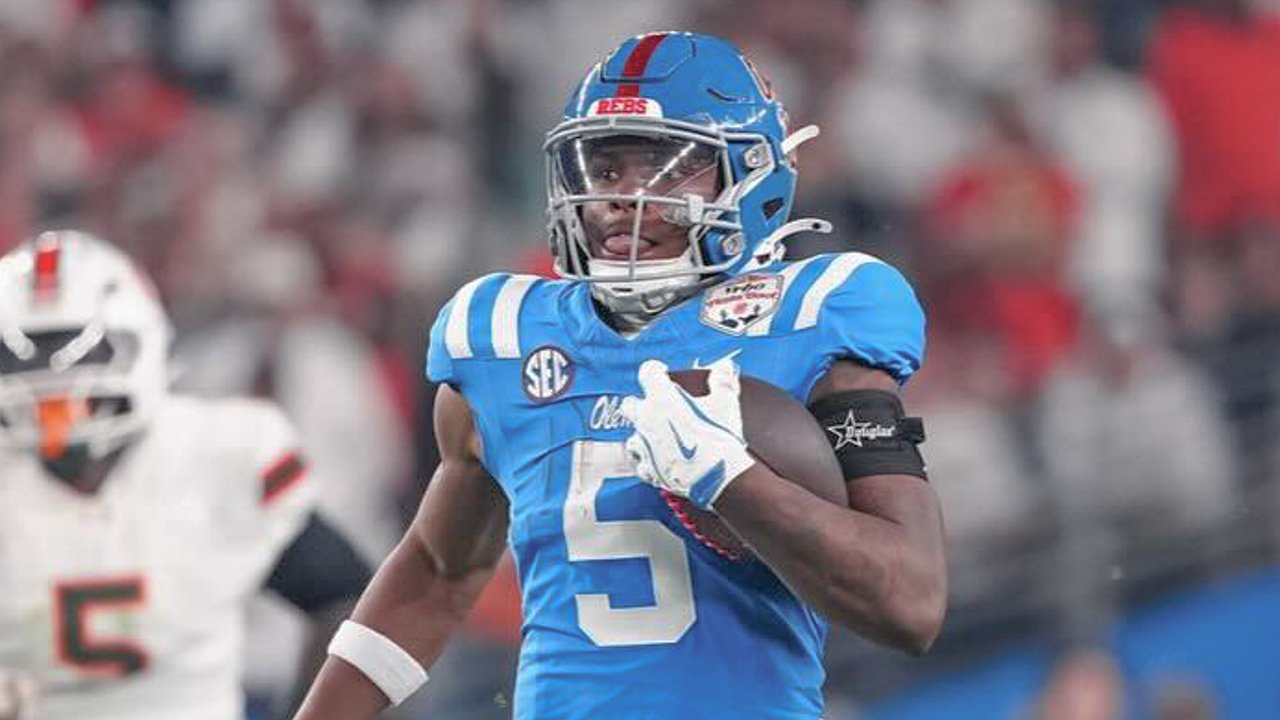
OXFORD, Miss. — Ole Miss didn’t whisper this one.
It didn’t leak it quietly or let it drift through the rumor mill like so many portal decisions do now.
The message landed with intent, clarity, and a number big enough to stop conversations across the SEC.
The Rebels made the decision that keeping running back Kewan Lacy was worth a reported $2 million a year, according to Ben Garrett’s story at OMSpirit.
Not in theory. Not in projections. In actual commitment.
In a league where money talks louder than nostalgia, Ole Miss spoke pretty clearly where everybody could understand.
That figure wasn’t just about production. It was about leverage.
It was about understanding the moment college football lives in now, where proven players don’t wait around to see what happens next.
They listen to offers. They listen to assumptions. And they decide.
For months, the assumption around the SEC was simple and widely shared. Lacy was gone. The only debate seemed to be where he’d land, not whether he’d leave.
Down in Baton Rouge, the confidence was loud enough to feel settled.
The LSU Tigers had needs in the backfield, money to spend, and fans who had already moved on to imagining how Lacy would fit into their offense.
It felt inevitable in the way portal rumors often do.
Former Ole Miss coach Lane Kiffin had moved on, relationships had shifted, and the dots were being connected long before any announcement was made. Baton Rouge talked like it was just a matter of timing.
Ole Miss watched all of that and decided it wasn’t interested in letting the league write its story for it.
Instead of a farewell, Lacy got a contract-level NIL commitment that made staying the logical choice.
Instead of an exit plan, the Rebels handed him a reason to keep carrying the ball in Oxford. LSU was celebrating a win it never secured and Ole Miss closed the door.
Ole Miss decides retention matters
This wasn’t just about one running back coming back for another season. It was about a philosophical shift that’s becoming clearer by the year.
Ole Miss has figured out that replacing proven production is harder, riskier, and often more expensive than simply keeping it.
Lacy represented certainty in an offense that values rhythm and reliability. He wasn’t just productive. He was trusted and ran with patience, finished runs, and gave the play-caller confidence in tight situations.
Those things don’t always show up cleanly in stat lines, but coaches feel them every week.
When NIL changed the sport, some programs treated it like an inconvenience. Ole Miss treated it like a tool.
The reported $2 million figure wasn’t subtle or accidental. It told Lacy exactly where he stood. It also told the locker room that performance still matters.
That kind of clarity changes dynamics inside a program. Teammates see who is valued. Future recruits see proof, not promises.
And other schools see that Ole Miss won’t just roll over when the portal knocks.
In Baton Rouge, the reaction was quieter than the buildup. Confidence turned into recalculation. The assumption that Lacy would arrive never turned into reality, and LSU was left adjusting plans instead of executing them.
Ole Miss didn’t steal anyone. It simply refused to give someone away.
Spending didn’t stop with Lacy
Keeping Lacy wasn’t the end of Ole Miss’ offseason strategy. It was the beginning.
Once the Rebels secured their most important offensive return, they kept adding pieces with purpose.
Additional signings followed, each reinforcing the same underlying idea. This wasn’t about winning one negotiation.
It was about building a roster that didn’t rely on panic moves in August. Ole Miss focused on depth, balance, and insurance against the volatility the portal brings.
The Rebels didn’t wait to see which players might leave before acting. They worked to prevent departures from becoming disasters.
That approach matters in a league where roster continuity is becoming a competitive edge.
Lacy’s return stabilized the running back room. The added signings strengthened the structure around him.
Together, they changed the conversation from “Who’s leaving?” to “What’s next?”
That’s a subtle but important shift. Programs that constantly react end up chasing gaps. Programs that plan get to dictate matchups. Ole Miss is trying to live in the second category.
LSU fans didn’t expect that. Neither did much of the league. But expectations don’t carry weight anymore unless they’re backed by action.
Ole Miss acted.
A new SEC reality settles in
The old version of college football leaned on patience, tradition, and waiting your turn. The current version rewards decisiveness and transparency.
Ole Miss understood that sooner than some of its rivals.
There’s nothing romantic about a reported $2 million NIL deal. It’s transactional. It’s direct. And it reflects the reality players operate in now.
Ole Miss didn’t dress it up. It made a choice and owned it.
That choice resonated beyond one player. It sent a message to future transfers and recruits watching closely.
If you produce here, the program will fight to keep you. Not with speeches, but with resources.
Meanwhile, LSU was left to adjust expectations it had already set. That’s part of the risk of assuming movement before it happens. In this SEC, nothing is final until the paperwork is done.
Ole Miss didn’t win the offseason with headlines. It won it by controlling what mattered most. It kept its running game intact, added around it, and refused to be predictable.
The Rebs didn’t chase validation. They chased stability.
And in today’s SEC, stability is starting to look like the rarest asset of all.
Key takeaways
- Ole Miss committed a reported $2 million per year to keep Kewan Lacy and protect its offensive foundation.
- LSU expectations fell apart when Ole Miss chose retention over replacement.
- The Rebels’ strategy shows a shift toward stability, depth, and proactive roster management.
Football
Trinidad Chambliss Is Back — And Ole Miss Got Lucky
Rebels quarterback survived an NCAA eligibility fight, weighed a move to LSU and came back to Oxford anyway. Ole Miss fans couldn’t be more relieved.

Nobody wanted the drama. Not the fans. Not the coaching staff. And certainly not Trinidad Chambliss.
But the drama came anyway, stuck around longer than anyone liked and then — mercifully — resolved itself in the best possible way.
Chambliss is back in Oxford. The Rebels have their quarterback.
And a fan base that fell completely in love with a backup-turned-record-setter gets to watch him play another season.
Go ahead and exhale.
The NCAA spent the offseason trying to block Chambliss from suiting up again, pursuing an interlocutory appeal of a February injunction handed down by Judge Robert Whitwell in Mississippi state court.
The goal was to fast-track a ruling before Ole Miss’ season opener and cut the whole thing short before it started.
The court declined in March. The Rebs never missed a step.
Chambliss walked into spring practice, took his snaps and kept building on what’s already one of the most remarkable single-season stories in program history.
Nobody threw a parade. They just got back to work. Which is exactly what everyone in Oxford wanted from the beginning.
Backup Who Became Record-Setter
It’s worth remembering that Chambliss wasn’t even the starter when last season began. He was the backup. Then he became something else entirely.
He threw for 3,937 yards and 22 touchdowns. He accounted for 4,464 total yards — third-most in a single Ole Miss season ever. The offense he ran became the first in school history to crack 7,000 total yards, finishing at 7,345. The Rebels won a program-record 13 games.
Fans didn’t just cheer for him. They adopted him. That’s the only word for it.
The backup who stepped in and delivered one of the greatest quarterback seasons in school history has a way of doing that to a fan base.
So when the NCAA eligibility fight started grinding through the courts this winter, the anxiety in Oxford was real.
Losing Chambliss wasn’t just losing a quarterback. It was losing the guy.
‘I’m Just Glad It All Worked Out’
Chambliss didn’t hide how hard the winter was. In a sit-down interview with WOOD TV8, a local affiliate in Grand Rapids, Mich. — where he’s originally from — he was straightforward about what those months felt like.
“Just very stressful because I didn’t really know what was going to happen,” he said. “I didn’t know where I was going to be next year, whether it would be the NFL or be in college football.
“Just trusting my family, my attorney and also trusting the Lord, too. Praying a lot and not really worrying too much. It’s out of my control. Let the chips fall where they may at the end.”
The chips fell right.
When the March ruling came down, Chambliss described something every Ole Miss fan felt right along with him.
“Man, it was a weight lifted off my shoulders,” he said. “I could finally relax and focus on Ole Miss spring ball, focus on where our team needs to go in the right direction for next year.
“Not have to deal with all that news and seeing articles with my name pop up with the NCAA. So, it was definitely great to see. I’m just glad that it all worked out.”
So is every single person in Oxford.
He Could’ve Left But Didn’t Want To
Here’s what makes the reunion feel even better. Chambliss had options.
The Transfer Portal was open. He told On3’s Chris Low this week that following Lane Kiffin to LSU was a genuine consideration.
He didn’t go. And listening to him explain why he chose Ole Miss in the first place makes it pretty clear this was always where he wanted to be.
“The communication up front when I first got there on my visit,” Chambliss said. “Them telling me that they think that I could be an impact player there. The opportunities that they would allow me to have.
“Just the people in Oxford, in the facility at Ole Miss. It just felt like home and it felt like a comfort zone for me.”
Navigating the Stardom
The eligibility fight wasn’t the only adjustment.
Chambliss had to figure out what it meant to suddenly be one of the most talked-about quarterbacks in the country.
The commercials came. The notoriety came. The Heisman chatter came.
He’s one of two way-too-early Heisman Trophy candidates and All-Americans for the Rebs heading into 2026.
Running back Kewan Lacy is the other, and Lacy said he turned down more money to stay in Oxford. Two building blocks who could’ve left — and didn’t.
Chambliss handled the spotlight the way you’d hope.
“It’s definitely a lot to digest,” he said. “A lot to take on. It was moving pretty fast. But it was really cool, though. With my parents’ help, it was smooth sailing and I think we did the best that we could given the circumstances.”
He didn’t let it change his approach.
“You just got to stay me and focus on the main goal,” he said. “That was being a good person and being good at football.”
That’s the guy Ole Miss fans fell for. Same guy. Still here.
The Season Ahead
The Rebels open the 2026-27 season against Louisville. The two programs meet in Nashville on September 6 at 6:30 p.m. and Ole Miss heads into that game with its most important pieces intact.
Nobody wanted the winter they got. The legal fight was stressful for Chambliss, exhausting for the program and nerve-wracking for a fan base that spent months wondering if the guy they loved was going to be wearing a different jersey.
He’s not. He’s back in Oxford, exactly where he wants to be, running an offense that rewrote the school record book and chasing something even bigger in 2026.
The drama’s over. The season’s coming.
For once, everybody’s happy about the same thing.


Ole Miss has had its name attached to several five- and four-star wide receivers in this recruiting cycle.
Talented wideouts like Miguel Whitley, Elias Pearl, Cade Cooper, Sheldon Isaac and even the class’s top-rated receiver, Easton Royal.
Pete Golding and the Rebels, like a basketball shooter, are taking a lot of shots with the hopes of making a few baskets. However, the recruiting process moves a lot slower in real life than it does in EA CFB 26, so the Rebels not having any wide receivers currently committed isn’t a cause for concern.
A lot of official visits are still to come, including this upcoming weekend. After that will come the commitments. When that happens sometimes gets announced ahead of time, and we just got an announcement date scheduled.
Four-star wide receiver Alvin Mosley, according to Rivals’ Sam Spiegelman, announced he is down to four schools and will make his commitment on June 27. The four schools still in contention are Texas, Arkansas, Houston and, of course, Ole Miss.
The Almeta Crawford (Texas) receiver is set to take his official visit to Ole Miss June 5-7 and spoke to Spiegelman about his relationship with Rebels wide receivers coach L’Damian Washington.
“Me and Coach Washington have a great relationship and he has been to Houston a few times to visit my family,” Mosley said. “Also, I’m excited about the opportunity to play early and the right fit for big wide receivers like me.”
Mosley has already taken visits to Austin and Houston, which has been a mainstay in the 6-foot-2, 185-pounder’s recruitment.
“They’re making me feel good and that I’m their No. 1 priority,” he said of Houston. “They’re doing a lot of things right, keeping up with me and with basketball … and with everything I do, they’re keeping up with.”
Mosley also spoke highly of Arkansas.
“Me and Coach (Larry) Smith been in talks for a while,” Mosley said. “I like the direction they are trying to go … to get back in the running. It’s been a strong push throughout my recruitment, and the coach has been out a few times for my spring practice. Also, they are looking for a big-time guy to come in and have the opportunity to play early. I like the underdog story that Arkansas is living in. With the way this recruitment is going, they have their eyes on changing the program around.”
The Rebels have cast a wide net at wideout, and Mosley is one of the names that has stayed near the top from the start. His June 27 announcement won’t define the class, but it will give Ole Miss an early read on how its summer strategy is working.

Ole Miss didn’t exactly shock the recruiting world on Wednesday, but it did lock down a quarterback who has been circling Oxford his entire life.
Brentwood Academy’s Crews Jenkins made it official, announcing his commitment to the Rebels and giving Pete Golding
another in‑state‑adjacent win in the 2027 class.
— Crews Jenkins 2027 QB (@CrewsJenkins3) May 6, 2026
This one always felt like it was headed here. Jenkins grew up in an Ole Miss family, spent his childhood in Vaught‑Hemingway, and made it clear early in his recruitment that the Rebels were the program he connected with the most. Other schools tried to make it interesting, but they were fighting uphill the whole way.
“This was a childhood dream. I have been going to games since I was as young as I can remember. I grew up a fan,” Jenkins told 247Sports’ Tom Loy. “They recruited me the hardest. They are a big school that chose to actually give me an opportunity for the next level. I think Coach Judge and Coach ‘JDB’ do a really good job of developing quarterbacks and turning them into really good players.”
Jenkins has the résumé to back up the attention. He stepped into the Brentwood Academy job last fall and completed 70 percent of his passes for 1,800 yards and 22 touchdowns while leading his team to the state title game. At 5-11 and 180 pounds, he’s not the prototype, but he’s accurate, competitive, and has been on a steady rise since the spring of 2025.
Golding treated him like a priority from the start. He didn’t assume Jenkins’ childhood fandom would do the work for him, and Jenkins noticed.
“He’s a players’ coach. He’s there for you,” Jenkins said. “Whether it has anything to do with football or not, he is still going to be there by your side and in your corner.”
Jenkins picked Ole Miss over FAU, Memphis, South Florida, Charlotte, Southern Miss, Toledo, and others. Vanderbilt and Kentucky kicked the tires, but the Rebels were always the team to beat.
Brentwood (Tenn.) Academy class of 2027 QB @CrewsJenkins3 had a really good two days in New Orleans at the @Elite11 and @TheOpening.
Just ask @devingardnerXCI 👀 @jtheaps9 and @QBCoachMcEvoy. They'll tell you the same.
🔗 https://t.co/PJkQsMuEBE@247Sports pic.twitter.com/FgDJAsnSQw
— Tom Loy (@TomLoy247) March 26, 2026
And no, Keegan Croucher’s presence in the class didn’t change anything. Jenkins knew Ole Miss was taking two quarterbacks, and he still wanted in. He’ll join a room that includes Deuce Knight and Walker Howard, and he’ll enroll early after his senior season. The fun twist is that Jenkins and Croucher will face each other to open the 2026 season, a matchup that now doubles as a future‑teammates game.
For Ole Miss, this is the kind of commitment that feels less like a surprise and more like a box checked. For Jenkins, it’s the end of a long wait. He’s headed to the place he always wanted to be.
Ole Miss Football 2027 Signing Class
- QB Keegan Croucher, Baylor School (Tenn.)
- OL Wade Ford, Oxford (Miss.)
- QB Crews Jenkins, Brentwood (Tenn.) Academy
- CB Taelyn Mayo, Lewisville (Texas)
- OL Coderro McDaniel, Brookhaven (Miss.)
- S Mason Moore, Baton Rouge (La.) Central
- DL Jamarkus Pittman, Memphis Academy (Tenn.)
- DL Ben’Jarvius Shumaker, Choctaw County (Miss.)
- EDGE Keysan Taylor, Rockford Guilford (Ill.)
- OT Roman Womack, NE Mississippi CC

Hunter Elliott Joins Elite Ole Miss Company in Win Over Texas A&M

Ole Miss Softball Lands Two Players on All-SEC Second Team

How to Watch Ole Miss Baseball’s Crucial SEC Opener Against Texas A&M


-
Eating Oxford12 years ago
Food & Drink: What’s Hot and What’s Not in 2015
-
Arts & Entertainment9 years ago
EatingOxford: 3 Steps to Success at 3 Blind Wines
-
Eating Oxford12 years ago
HottyToddy Tailgate: Crescent Rolls 5 Ways
-

 Eating Oxford4 years ago
Oxford restaurants adjust to inflation, other pressures by raising prices
-
Eating Oxford13 years ago
My Michelle’s: Personal Chefs
-

 Eating Oxford4 years ago
Locally Driven and Focused to Serve from Day to Night: Good Day Café & Bar Muse
-

 Eating Oxford4 years ago
“I am from here”: Snackbar Chef Vishwesh Bhatt celebrates new cookbook
-
Eating Oxford10 years ago
Oxford Stories: Chicken on a Stick Is an Oxford Tradition